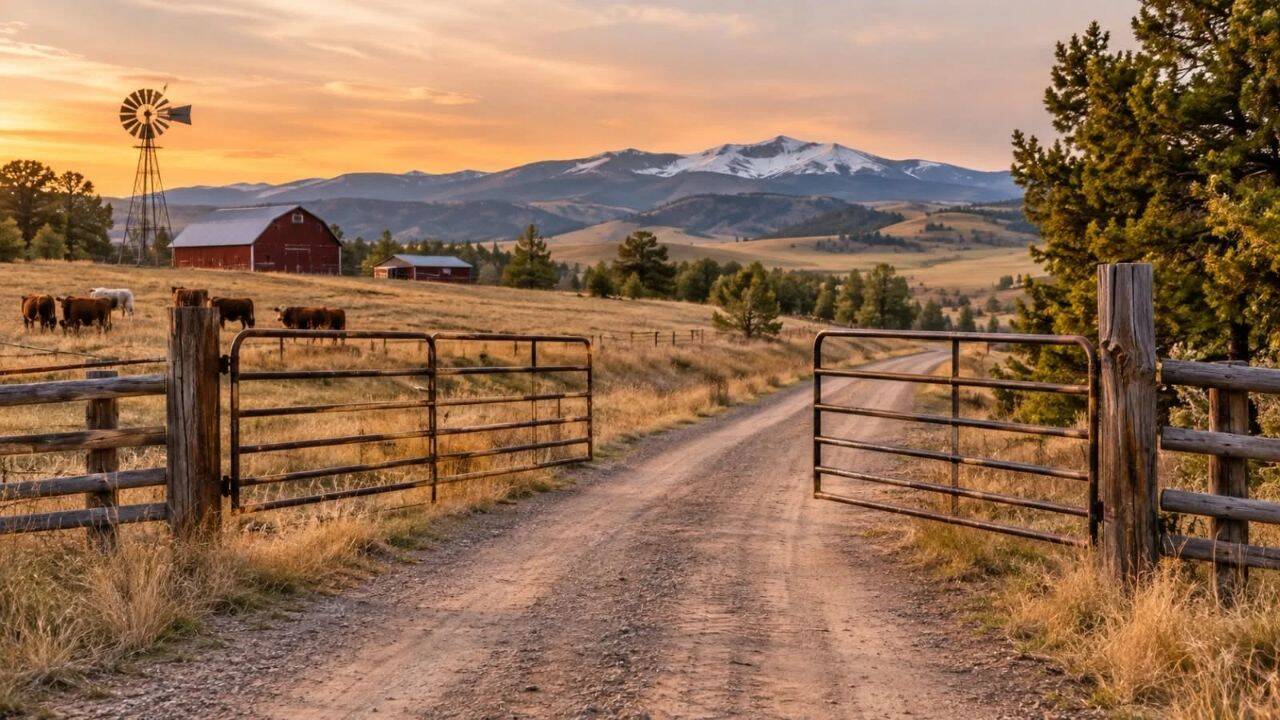
Crossing a neighbor's dirt track for sixty-eight years feels like a birthright until someone hands you a court order saying you don't own the right to set foot on it. That harsh reality hit home in Camilletti Ranch Properties, LLC v. Seely, where the Colorado Court of Appeals issued a November 12, 2026 ruling affirming a permanent injunction against a Routt County ranching family whose access dated back to 1958.
You might assume that driving a ranch road for nearly seven decades locks in a permanent right of way. Honestly, it doesn't work like that in Colorado. Time alone isn't enough when the crossing started out or operated as neighborly permission rather than open hostility to the owner's rights.
How a 1958 Routt County Ranch Dispute Reached Appeals Court
The story starts in 1958, when Lowry Seely bought a ranch in Routt County, Colorado. Later, in 1971, David Seely picked up neighboring land and used it for ranching operations. Across those years, the Seely family used a road crossing neighboring land owned for decades by Harvey and Velda Wyman (and later the Velda L. Wyman trust).
New chapters began when Darrell and Carol Camilletti purchased the Wyman property in 2021 and transferred it to Camilletti Ranch Properties LLC in 2024. Even after the ownership shift, the Seely family kept crossing the land twice a year. Friction over whether the family held an independent right to cross sparked litigation in Routt County District Court.
Following a bench trial, the district court sided with Camilletti Ranch Properties LLC on its trespass claim, rejected the Seelys' prescriptive easement counterclaims, awarded nominal damages for trespass, and granted a permanent injunction blocking unauthorized use. On November 12, 2026, in Case No. 25CA1487 (an unpublished decision under Colorado Appellate Rule 35(e)), Judges Freyre and Lum joined to affirm the judgment.
Why Sixty-Eight Years Still Lost the Prescriptive Easement Fight
In Colorado, a prescriptive easement gives someone a nonexclusive right to use another person's land for a specific purpose without owning the dirt underneath. Under cases like Lo Viento Blanco, LLC v. Woodbridge Condo. Ass'n, a claimant has to show that the use was open or notorious, continuous without effective interruption for at least eighteen years, and adverse.
Here's the catch that trips up families and neighbors all the time. Once you show eighteen years of open, continuous use, Colorado law gives you a helpful presumption that the use was adverse—meaning you acted as if you had a claim, not merely a favor. Yet that presumption isn't ironclad. A property owner can rebut it by showing the use was actually permissive.
In rural land disputes, gates play a huge role in how courts read permission versus adversity. Colorado precedent—including McIntyre v. Bd. of Cnty. Comm'rs and Maralex Resources, Inc. v. Chamberlain—recognizes that erecting a gate across a private road often signals that the landowner controls access and that crossing happens by permission rather than as an adverse right. Once a court finds permissive use over the relevant stretch of history, a decades-long habit doesn't magically turn into a permanent easement just because new owners buy the ranch and lose patience.
Independent arguments don't rescue a claim when the underlying finding of permissive use undercuts it. Even where a trial court doesn't write separate, granular findings for every single variation of a neighbor's easement theory, the appellate court can affirm when the core ruling on non-adverse use resolves the dispute.
Neighborly Goodwill vs. Hard Property Rights
Out in ranch country, folks shake hands, wave from pickups, and let neighbors move cattle or equipment across corners of a property for generations. It's friendly. It's practical. It's also a legal time bomb if nobody puts anything in writing.
When a friendly arrangement lasts forty or sixty years, people start treating informal access like a deeded easement. They budget around it, plan grazing rotations around it, and assume a buyer has to honor it. Then a new buyer steps in, looks at a title commitment, sees no recorded easement across the parcel, and asks hard questions.
A lot of buyers and sellers get blindsided by this gap between what happens on the ground and what's recorded in the clerk and recorder's office. You can see tire ruts every spring and fall for half a century and still have zero recorded right to cross when the land changes hands.
Common Myths About Ranch Roads and Access
People hear "use for over eighteen years" and jump straight to thinking the road belongs to them forever. That's a classic mistake.
- Myth: Long use automatically beats a new owner. A new buyer doesn't automatically erase valid pre-existing easements, sure, but if the use was permissive rather than adverse, there was no prescriptive easement to begin with.
- Myth: Gates never matter unless locked. Even gates and how landowners manage control over a private road can weigh heavily in whether courts view crossing as permitted rather than hostile.
- Myth: Handshake understandings protect future generations. Verbal nods and quiet tolerance rarely survive generational turnover, estate transfers, or outside buyers with different priorities.
What Landowners and Neighbors Should Do Next
If you own rural land or rely on a neighbor's road to reach pastures, timber, or acreage, don't wait for a fence post or a lawsuit to force the issue.
- Pull the recorded title and survey. Check county clerk and recorder records for express easements, reservations, or plat notes covering the exact route.
- Document permission clearly if you're the landowner. If you let a neighbor cross as a courtesy and don't want a claim building over time, put written permission or a revocable license in place with legal counsel.
- Negotiate a recorded easement before buying or selling. If access is vital to a parcel's value or ranching operations, get a clear, recorded easement—or walk away—before closing.
- Talk to a Colorado real estate attorney early. Property disputes in district court are slow, expensive, and emotionally draining; a lawyer who handles Colorado easements (see resources from the Colorado Bar Association and Colorado Judicial Branch) can give you a realistic read on your facts before tempers flare.