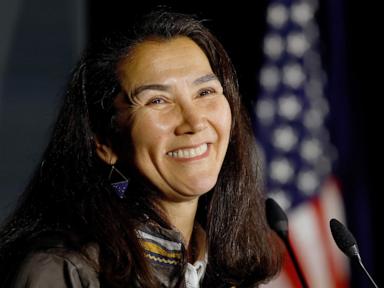
National pundits looked at the map in November 2026 and assumed Alaska was an automatic lock for the GOP. They were dead wrong.
Democrat Mary Peltola just won the Alaska Senate race, defeating longtime incumbent Republican Dan Sullivan in a result projected by the Associated Press. It's a massive political earthquake that flips a red seat blue in a state Donald Trump carried comfortably just two years ago. If you only follow politics from a desk in Washington, D.C., this outcome looks like a fluke.
It wasn't a fluke.
Having watched Alaska politics closely for years, I can tell you that national analysts consistently misread the Last Frontier. They treat it like Wyoming or Idaho—deep red states where a Democrat doesn't stand a chance unless a massive scandal hits the Republican ticket. That assumption ignores everything that actually drives voters in Anchorage, Fairbanks, Juneau, and the rural Bush communities.
Why Mary Peltola Won the Alaska Senate Race
To understand how Mary Peltola pulled off this victory against Dan Sullivan, you have to look at the mechanics of Alaska's election system and her specific brand of retail politics. First, the top-line reality is simple. Peltola defeated Sullivan after the state's ranked-choice voting tabulation confirmed she cleared the 50% threshold required to win the seat.
Dan Sullivan entered the 2026 cycle as a two-term Republican incumbent with deep institutional backing, a massive war chest, and the endorsement of Donald Trump. On paper, he had every structural advantage a sitting senator could ask for. Yet Peltola, the former U.S. House representative who first broke through in a 2022 special election, managed to build a coalition that crossed party lines in ways few modern Democrats can replicate anywhere in the country.
Her message wasn't built on national Democratic talking points. Far from it. Peltola ran aggressively on "fish, family, and freedom"—the exact same localized platform that carried her to the House previously. While national Democrats spent the 2026 midterms talking about broad macro-economic indicators and Washington gridlock, Peltola hammered away at commercial fishing protections, Bering Sea trawler regulations, and resource development projects that actually pay the bills in Alaska.
Dan Sullivan tried to tie her to national Democratic leadership at every turn. His campaign poured millions into ads framing a vote for Peltola as a vote for Senate Democratic control and liberal environmental restrictions. In most red states, that playbook works like clockwork. In Alaska, voters already knew Mary Peltola. They knew she had broken with the Biden administration on oil and gas leasing—most notably championing the massive Willow project on the North Slope—and they knew she held an A rating from the NRA earlier in her career. You can't easily paint someone as an out-of-touch coastal liberal when half the state has seen her at local salmon fisheries and town halls for decades.
The Ranked-Choice Voting Factor Nobody Explains Properly
Whenever a Democrat wins statewide in Alaska, critics immediately blame ranked-choice voting (RCV). You're going to hear that exact complaint non-stop over the next few weeks. Let's clear up how it actually worked in this race.
Under Alaska's open primary and ranked-choice general election system—adopted by voters in 2020 and narrowly upheld against a repeal effort in 2024—all candidates run on a single primary ballot. The top four vote-getters advance to November. In the general election, voters rank candidates in order of preference. If nobody gets over 50% of first-choice votes, the last-place candidate is eliminated, and their voters' second choices are redistributed until someone crosses that majority line.
Here's what people miss about RCV in Alaska. It doesn't magically invent Democratic votes out of thin air. What it does is force candidates to appeal to the middle rather than playing exclusively to their partisan base.
In the 2026 Senate race, Sullivan struggled to consolidate enough second-choice votes from independent and nonpartisan voters. Alaska has the highest percentage of registered nonpartisan and undeclared voters in the nation—well over half of the electorate refuses to register with either major party. Sullivan ran a campaign tailored heavily toward the Trump-aligned GOP base. That kept his floor high, sure, but it put a hard ceiling on his support when ballots from eliminated third-party and independent candidates were redistributed.
Peltola, meanwhile, spent years cultivating relationships with moderate Republicans and independent-minded Alaskans. When voters who didn't pick her first had to decide between Peltola and Sullivan as their backup option, enough of them broke her way to push her past 50%. That's not a glitch in the system. That's literally the entire point of a majority-vote requirement.
Dan Sullivan's Incumbency Trap
Incumbency is supposed to be a shield, but after twelve years in the U.S. Senate, Dan Sullivan found out it can also become a weight.
When Sullivan first won his seat in 2014 by narrowly defeating Democrat Mark Begich, he ran as an outsider who would shake up Washington and fight federal overreach. Twelve years later, he was the Washington establishment. Voters in Alaska have a notoriously independent streak, and they get restless when they feel their senators are spending more time on cable news or party leadership committees than addressing local cost-of-living crises.
Inflation, high energy prices in rural communities, and the collapse of major crab and salmon runs hit Alaskans hard between 2022 and 2026. Sullivan pointed to his seniority on the Senate Armed Services Committee and his work securing military infrastructure funding for bases in Fairbanks and Anchorage. Those are real achievements, and they kept him competitive in military-heavy precincts.
But military spending doesn't lower the price of groceries in Bethel or save a family-owned fishing boat in Kodiak. Peltola capitalized on that disconnect. She talked constantly about the decline of king salmon and snow crab populations, framing fisheries management as an existential economic issue for the state. By the time Sullivan's team realized how much traction she was getting on commercial and subsistence fishing issues, voters had already locked in their impressions.
How This Flips the Math in the U.S. Senate
Let's look at the bigger picture. Prior to the 2026 midterm elections, Republicans held a 53–47 majority in the U.S. Senate after picking up four seats in 2024. The 2026 Senate map was widely viewed by analysts at outlets like the Cook Political Report and Sabato's Crystal Ball as tough terrain for Democrats trying to claw back control.
To win back the chamber, Democrats needed a net gain of four seats—or three if they held the vice presidency, which they didn't. Holding vulnerable incumbents in states like Georgia and Michigan while trying to flip seats in Maine and North Carolina left zero margin for error. Nobody outside of Anchorage seriously penciled Alaska into the "likely pickup" column at the start of the cycle.
Peltola's victory changes the entire arithmetic of the upper chamber. Picking up a seat in a state Republicans counted as safe gives Senate Democrats crucial breathing room and dramatically complicates the GOP's legislative path heading into the final two years of the Trump administration.
Even more interesting is how Peltola will actually govern once she's sworn in. Don't expect her to suddenly turn into a rubber stamp for Senate Democratic leadership. Her entire political survival depends on maintaining her independence. She is joining a very small club of red-state or purple-state Democrats who survive by breaking with their party on energy, guns, and federal land management. Expect her to be one of the most heavily courted swing votes in Washington on permitting reform, defense appropriations, and Arctic policy.
What History Tells Us About Alaska's Political DNA
If you look back at Alaska's history since statehood in 1959, Peltola's win actually fits a long-standing pattern that outsiders forget. Alaska has never been a traditional ideological state. It's a transactional, resource-driven state that rewards politicians who bring home federal dollars and protect local autonomy, regardless of the letter next to their name.
Before Ted Stevens became a Republican institution in the Senate, Alaska sent Democrats like Bob Bartlett and Ernest Gruening to Washington. Even during the height of GOP dominance, Alaskans elected Democrat Tony Knowles twice as governor in the 1990s, sent Mark Begich to the Senate in 2008, and elected independent Bill Walker as governor in 2014.
Voters there despise being told what to do by bureaucrats in D.C.—whether those bureaucrats work for a Democratic EPA or a Republican Interior Department. Peltola understands this instinct in her bones. Being Yup'ik and growing up in the Yukon-Kuskokwim Delta gave her a lived understanding of rural Alaska that you simply can't fake with focus groups. She became the first Alaska Native elected to Congress when she won the House seat in 2022, and now she makes history again as the first Alaska Native elected to the U.S. Senate.
Three Common Misconceptions About This Race
Because national media coverage of Alaska tends to be shallow, a few bad takes are already circulating. Here's what you need to ignore:
- Misconception 1: Alaska is turning into a blue state. It isn't. Presidentially and down-ballot, Alaska still leans right. Peltola won because of candidate quality, localized messaging, and coalition-building—not because Anchorage suddenly turned into Seattle. Another Democrat running a standard national progressive campaign would have lost to Dan Sullivan by double digits.
- Misconception 2: Republican voters stayed home. Turnout in midterm years always drops compared to presidential cycles, and Alaska is no exception. However, Sullivan still pulled strong numbers in core Republican strongholds like the Matanuska-Susitna Valley. He didn't lose because his base abandoned him; he lost because Peltola won over independent and crossover voters who split their tickets.
- Misconception 3: Peltola will be an easy target in 2032. Senate terms are six years, not two. Unlike her House runs—where she had to campaign constantly every 24 months—Peltola now has six full years to use the power of incumbency, sit on key committees, and deliver tangible projects for Alaska communities before she faces voters again.
What to Watch Next as the Dust Settles
If you want to track how this race reshapes both Alaska and the U.S. Senate over the coming months, pay attention to three specific developments rather than the cable news chatter:
- Committee Assignments: Watch which Senate committees Peltola lands on in January. If Senate Democratic leadership is smart, they'll put her directly on the Senate Energy and Natural Resources Committee and the Commerce Committee (which oversees fisheries and the Coast Guard). Giving her those platforms lets her deliver immediate wins for Alaska.
- Official Certification by the Alaska Division of Elections: While the Associated Press has projected Peltola as the winner, keep an eye on the final certified tallies from the Alaska Division of Elections over the next couple of weeks to see the exact round-by-round ranked-choice breakdown and precinct-level shifts in Anchorage and Fairbanks.
- GOP Post-Mortems and RCV Challenges: Watch how Alaska Republicans respond internally. After losing the House seat in 2022 and now a Senate seat in 2026 under ranked-choice voting, pressure inside the state GOP to rethink candidate recruitment—and potentially launch another ballot measure against RCV—will spike immediately.
Mary Peltola proved that candidate quality and genuine local roots can still override national partisanship, even in one of the most polarized eras in American history.



