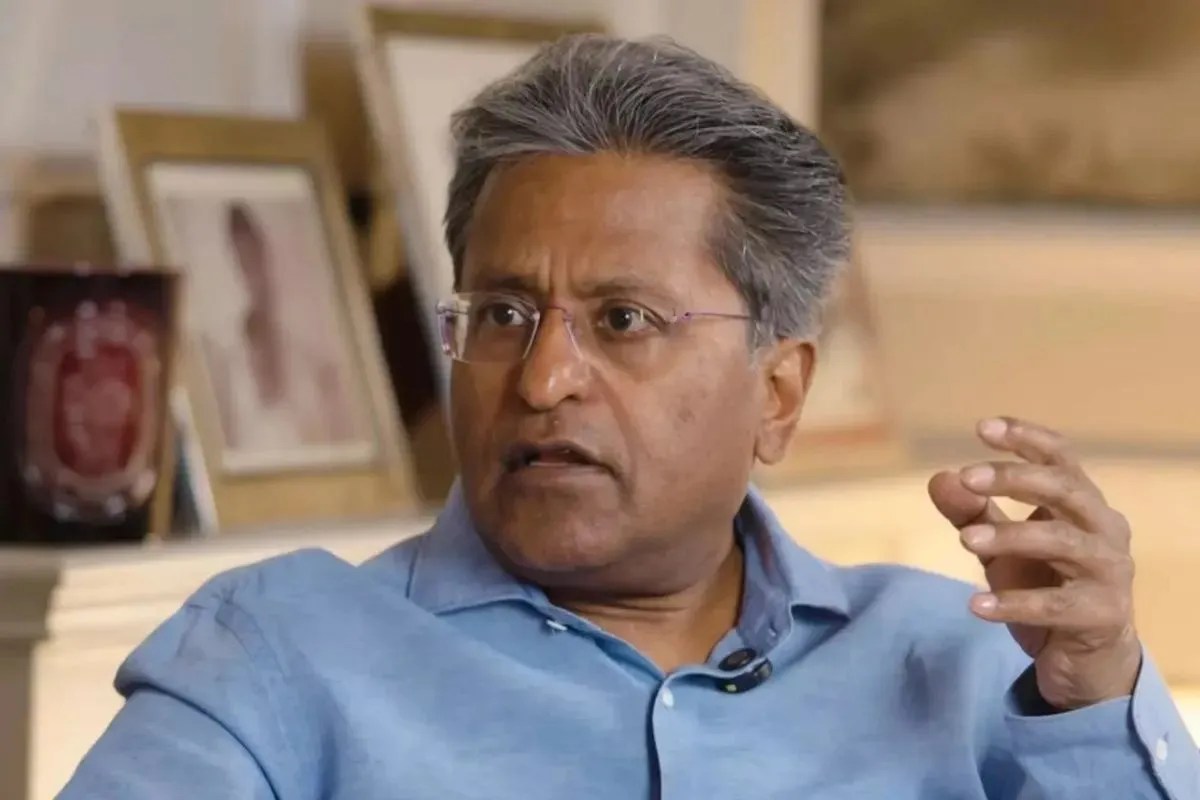
When former Indian Premier League (IPL) chairman Lalit Modi recently stated that there isn't a single legal case pending against him anywhere in the world, it sparked instant disbelief across Indian newsrooms and social media timelines. How could a man who left India in 2010 amid massive financial controversies, tax evasion probes, and money laundering allegations suddenly claim a completely clean slate?
Honestly, it sounds like pure spin at first glance. Most casual observers assume that once Indian agencies like the Enforcement Directorate (ED) or the Central Bureau of Investigation (CBI) open a file on you, you're a wanted fugitive until you step inside an Indian courtroom.
That assumption misses how international law, Interpol notices, and domestic Indian prosecutions actually function in practice. While Lalit Modi's latest remarks—alongside his blunt dismissal of returning to India anytime soon and ongoing chatter around his Vanuatu citizenship—are undeniably self-serving, there's a bizarre legal reality behind his bravado that mainstream headlines rarely bother to unpack.
The Reality Behind Lalit Modi's "No Case" Claim
Let's get straight to the core of his argument. When Lalit Modi says he faces no cases anywhere in the world, he's leaning heavily on a specific technicality—the absence of formal criminal convictions and the repeated failure of Indian authorities to secure an Interpol Red Notice against him. To explore the bigger picture, check out the detailed report by TIME.
Back in 2010, right after the third season of the IPL wrapped up, the Board of Control for Cricket in India (BCCI) suspended Modi over allegations of financial irregularities, bid rigging, and improper awarding of broadcast and internet rights. Soon after, he relocated to London, citing threats to his life from the underworld. Over the next decade and a half, the Enforcement Directorate launched multiple investigations under the Foreign Exchange Management Act (FEMA) and the Prevention of Money Laundering Act (PMLA).
Yet, look at what happened on the international stage. In 2017, Interpol officially rejected India's request to issue a Red Notice against Modi. Interpol's Commission for the Control of Files (CCF) examined the evidence submitted by Indian agencies and concluded that the charges didn't meet their threshold for international police cooperation. Even subsequent attempts by Indian authorities to revive the Red Notice fell flat.
From Modi's perspective sitting in London, if the world's largest international police organization refuses to flag him, and British courts haven't entertained an active extradition warrant against him, he treats the entire Indian investigation as legally toothless.
Conviction vs. Investigation
Here is where you need to separate PR talking points from actual legal facts. Does an Interpol rejection mean the Enforcement Directorate closed its files? No. Not even close.
In India, several proceedings involving Modi have dragged on for years:
- FEMA Show-Cause Notices: The ED issued multiple notices to Modi, the BCCI, and other officials regarding alleged violations of foreign exchange laws worth hundreds of crores during the 2009 IPL season held in South Africa.
- PMLA Investigations: Agencies registered money laundering probes linked to the 2008 broadcast rights deal with World Sports Group (WSG) and Multi Screen Media (MSM), alleging kickbacks and unauthorized facilitation fees.
- The 2015 Non-Bailable Warrant: A special PMLA court in Mumbai did issue a non-bailable warrant (NBW) against him years ago, which formed the basis of India's extradition push with the United Kingdom.
However, an active investigation or a show-cause notice isn't the same thing as a criminal conviction. And because Modi hasn't been extradited to stand trial in Mumbai, none of these cases have reached a final verdict. Modi exploits this exact gap. By pointing out that he walks freely through London, travels internationally, and holds no criminal record in the UK or anywhere else, he frames the Indian probes as politically motivated harassment rather than legitimate criminal cases.
Why His Return to India Remains Off the Table
In the same breath as his clean-chit claims, Lalit Modi addressed the elephant in the room—whether he plans to return to India. His answer was an unambiguous no.
People often wonder why someone who insists he's completely innocent wouldn't just fly back to Mumbai, face the judges, and clear his name once and for all. If you've ever dealt with India's white-collar criminal justice system, you already know the answer.
Under the Prevention of Money Laundering Act (PMLA), getting bail is notoriously difficult. Section 45 of the PMLA places twin conditions on bail that flip the traditional burden of proof, requiring the accused to convince the court that they're likely innocent before a trial even begins. For a high-profile figure like Modi, landing at Chhatrapati Shivaji Maharaj International Airport would almost certainly mean immediate arrest by the ED, followed by months—or even years—in judicial custody while lawyers argue preliminary motions.
Modi knows this. Why trade a comfortable, jet-setting lifestyle in Mayfair and across Europe for an indefinite stint in Arthur Road Jail just to prove a point? From a purely pragmatic standpoint, staying abroad gives him maximum leverage and zero physical risk.
The Vanuatu Passport Angle Explained
You can't talk about Lalit Modi's refusal to return to India without looking at his citizenship strategy. Reports and public discussions around Modi acquiring a passport from Vanuatu—a small South Pacific island nation—highlight how ultra-wealthy individuals navigate global mobility when their home country revokes their passport.
India revoked Modi's passport back in 2011 after he ignored summons from the Enforcement Directorate. Though the Delhi High Court later restored it in 2014 on procedural grounds, relying solely on an Indian passport as a person of interest to Indian agencies is a massive vulnerability.
Enter Citizenship by Investment (CBI) programs. Vanuatu runs one of the fastest CBI schemes on the planet, allowing wealthy applicants to obtain citizenship and a passport in a matter of weeks in exchange for a financial contribution to the state's development fund.
Holding a second passport from a jurisdiction like Vanuatu changes the game in three major ways:
- Insulation from Passport Revocation: Even if New Delhi cancels his Indian travel documents tomorrow, he retains a valid, internationally recognized passport to cross borders.
- Extradition Complexity: Extraditing a citizen of a third country—especially one that doesn't have a streamlined bilateral extradition treaty with India—adds layers of diplomatic and legal friction.
- Banking and Residency Access: Having alternative citizenship simplifies maintaining residency permits in Europe and managing international financial accounts without constant triggers tied to an Indian passport flagged by domestic regulators.
It's a classic move straight out of the global wealth-management playbook. Critics call it dodging accountability, while defense lawyers call it prudent risk management. Either way, it explains why Modi speaks with such confidence about never needing to step foot in India again.
Why India's Extradition Efforts Keep Stalling
Whenever Lalit Modi makes headlines, public anger usually turns toward Indian investigative agencies. Why haven't they brought him back after sixteen years? It isn't necessarily for lack of trying—it's because the UK extradition framework is brutally strict.
To extradite someone from the United Kingdom to India under the 1992 UK-India Extradition Treaty, Indian authorities have to clear several high hurdles in Westminster Magistrates' Court:
- Dual Criminality: The alleged offense must be recognized as a serious crime in both India and the UK. Purely regulatory or foreign exchange violations under FEMA—which are civil offenses in India—simply don't qualify for extradition.
- Prima Facie Evidence: India has to present admissible, airtight evidence showing a strong case to answer, not just a collection of unverified witness statements or agency dossiers.
- Human Rights and Prison Conditions: Under Article 3 of the European Convention on Human Rights (which still governs UK extradition law), defense lawyers routinely challenge extradition requests by arguing that Indian prison conditions are overcrowded or that the accused won't receive a fair, timely trial.
We've seen this exact script play out with Vijay Mallya and Nirav Modi. Even when UK courts eventually approve extradition after years of appeals, final executive sign-offs and confidential asylum or human rights claims keep the individuals in Britain indefinitely. In Lalit Modi's case, the extradition request never even gained the momentum that Mallya's or Nirav Modi's cases did, largely because the underlying charges in his file were heavily rooted in commercial cricket disputes and foreign exchange rules rather than straightforward bank loan defaults.
What You Should Watch Next
If you're following this saga to see whether Lalit Modi will ever actually face an Indian courtroom, don't hold your breath waiting for a dramatic airport arrest. Instead, keep an eye on these specific developments that actually carry weight:
- ED Adjudication Orders: Watch for final penalty orders from the Enforcement Directorate under FEMA. Even without Modi in India, the ED can impose massive monetary fines and attach his remaining domestic assets or properties.
- BCCI Legal Recoveries: Track any ongoing civil arbitration or recovery suits filed by the BCCI against Modi in Indian courts, which operate independently of criminal extradition timelines.
- Vanuatu and UK Residency Reviews: Notice whether European authorities or Vanuatu tighten due diligence rules on past CBI passport holders—the European Union has already revoked Vanuatu's visa-free travel access over security concerns, which limits the practical power of that passport.
Lalit Modi's claim that he has zero cases against him is a clever piece of verbal gymnastics. Technically, he has zero convictions and zero active Interpol notices, which lets him live freely abroad. Practically, the Indian legal files haven't vanished—they're just frozen in the vast gap between Mumbai's courtrooms and London's extradition laws.



