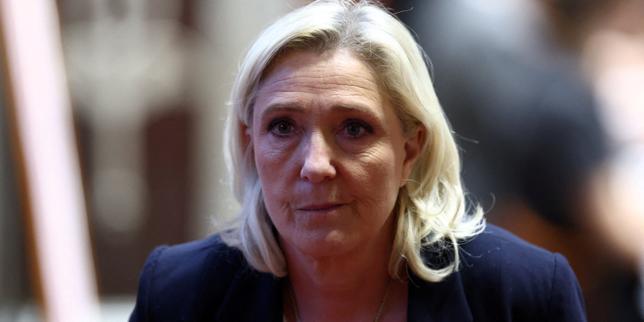
When a political heavyweight sits down behind closed doors with a foreign ambassador, you know the choreography matters just as much as the transcript. Marine Le Pen's meeting with Vadym Omelchenko, the Ukrainian ambassador to France, wasn't just a routine diplomatic stop. It was a calculated message sent straight to Kyiv, Brussels, and the rest of the French political class. The core takeaway is simple: if she wins the presidency, the direct cash pipeline from Paris to Kyiv stops flowing.
Let's look at what was actually said, what gets misunderstood, and why this strategy is turning heads.
The Financial Reality Check
For months, the positioning from the Rassemblement National has been evolving under the pressure of upcoming electoral deadlines. During their meeting, Le Pen didn't mince words about the state of French public finances. She made it clear that the domestic budget constraints simply won't accommodate long-term direct financial subsidies for Ukraine once she takes office.
Yet, nuance matters here. Her team was careful to specify that commitments already locked in—such as the broader European Union financial frameworks and existing institutional packages—would be respected in the short term. The transition plan floated by her camp involves maintaining direct disbursements for a brief six-month window post-election before cutting off the financial flows completely.
Critics call it a backdoor withdrawal of support. Her supporters call it a necessary reality check for a country dealing with its own staggering deficit issues.
Weapons and Humanitarian Aid Do Not Stop
One of the most persistent misconceptions is that a nationalist victory in France means an immediate, total abandonment of Ukraine on all fronts. That is not what the recent talks indicate.
While the direct cash transfers are slated for an expiration date under a potential Le Pen presidency, the official stance maintains a different kind of backing:
- Continued provisions of military hardware and equipment donations.
- Sustained humanitarian relief efforts.
- A push for a more active diplomatic posture in future negotiations.
By drawing a sharp line between handing over cash and supplying tactical or humanitarian resources, the RN wants to thread a very narrow needle. They want to appeal to voters weary of foreign spending without completely alienating international partners who view total disengagement as a geopolitical disaster.
The Diplomatic Balancing Act
You cannot talk about this meeting without mentioning the elephant in the room: the long-standing accusations linking French nationalist leaders to Moscow. Meeting with Ambassador Omelchenko is a direct attempt to shake off that image.
Consider the contrast. While Volodymyr Zelensky publicly invited various French political figures—including potential presidential rivals—to visit Kyiv directly, Le Pen has kept her distance from traveling there. Instead, she floated the idea of meeting the Ukrainian leader on neutral ground in Brussels. That reluctance to fly to Kyiv tells you everything you need to know about how tightly controlled her foreign policy image has become. She wants to look presidential without walking into a photo-op that her base might question.
Meanwhile, current leadership in Paris isn't staying quiet. Emmanuel Macron has repeatedly warned that pulling back financial or military support forces Ukraine into a compromised position, creating a vulnerable flank across Europe.
What Happens Next
The timeline leading up to 2027 is tightening fast. As candidates lay out their blueprints, voters are forced to weigh soaring national debt against international stability. Whether this strategy of cutting the purse strings while keeping the equipment flowing will convince undecided voters remains to be seen. But one thing is certain: foreign policy is no longer just a backdrop for the French presidential race—it is front and center.



