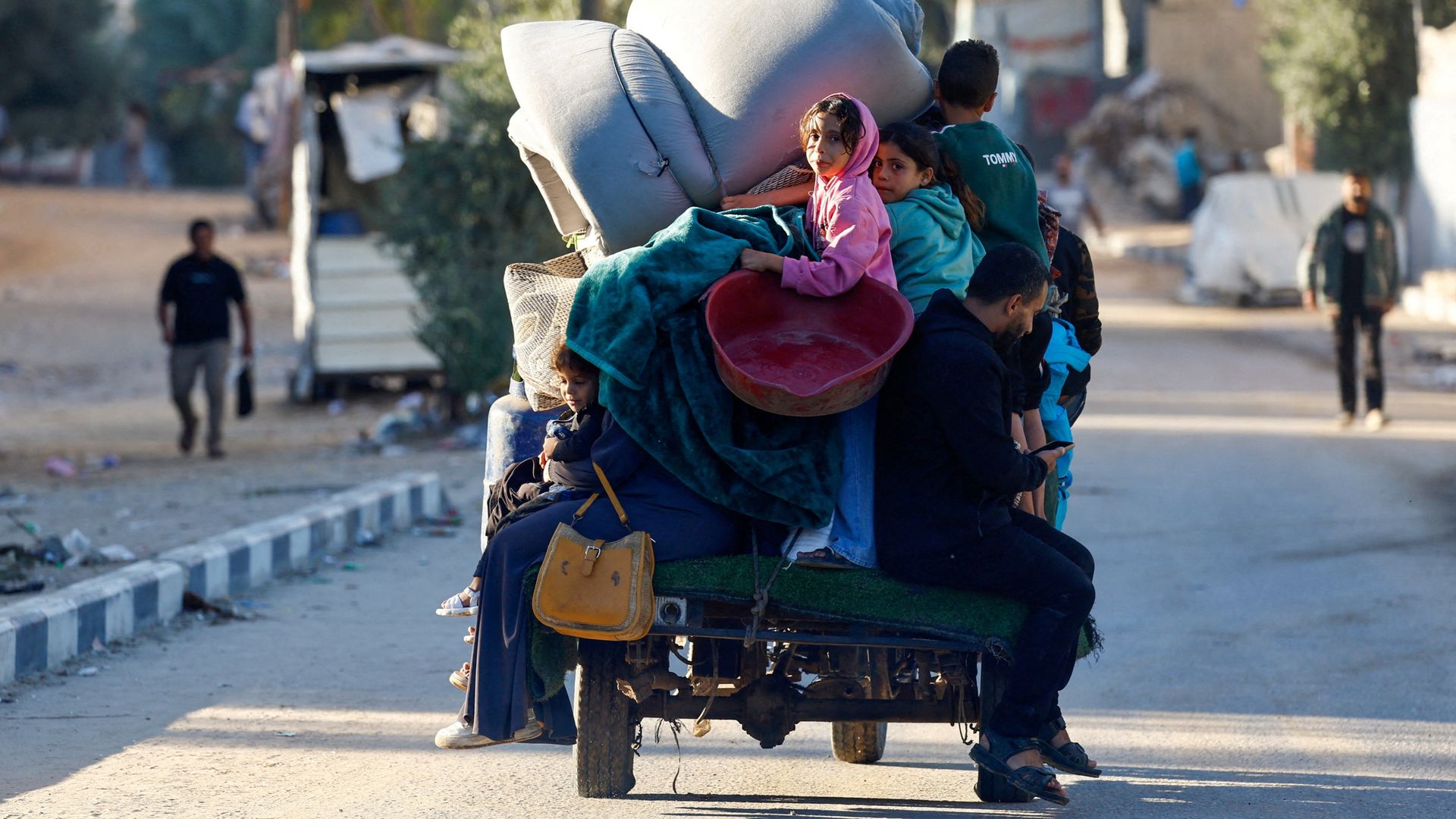
Tents empty out in a hurry when tank tracks start rolling down Salahudeen road. Thousands of displaced families are packing up whatever belongings they can carry, fleeing once again as Israeli troops push back into parts of central Gaza.
This latest ground operation marks a critical turning point. It shatters the quiet illusion that a fragile regional ceasefire could hold without deeper political solutions. If you're trying to make sense of why these escalations keep happening, you have to look past the daily casualty reports and examine how military strategies interact with stalled diplomacy.
Why the Central Gaza Operation Changes Everything
The advance isn't just another routine skirmish. Israeli armored vehicles and bulldozers pushed directly along the primary north-south traffic artery, cutting through zones that had seen relative calm since previous withdrawals.
Military spokespersons maintain that the push targets remaining militant infrastructure and active threats west of the demarcation line. Yet, the ground reality on the receiving end looks entirely different. Hospitals like al-Awda are reporting incoming casualties from strikes hitting nearby areas like al-Mughraqa and Deir al-Balah, pushing local medical systems past their absolute breaking point.
When international observers evaluate these flare-ups, they usually point to a failure of compliance on multiple sides. International monitoring bodies have repeatedly noted that neither faction has fully met its commitments under the broader truce terms. Reconstruction has stalled. Aid restrictions remain tight. Disarmament talks went nowhere.
The Human Toll Behind the Military Line
Statistics rarely capture the sheer exhaustion of populations trapped in the middle. Families who thought they found a temporary haven in central Gaza are now forced onto roads packed with debris, carrying children and meager supplies on foot.
Local aid workers and medical personnel express deep frustration because resources are completely depleted. Every time a new evacuation order comes down, thousands more people crowd into shrinking coastal zones where clean water and sanitation are virtually nonexistent.
Where the Conflict Goes From Here
Diplomatic channels are currently spinning into overdrive behind closed doors, but mediators face a massive credibility gap. Hamas insists that any ground incursions and forced displacements violate the baseline agreement. Meanwhile, Israeli security leadership views ongoing military pressure as the only language that prevents regrouping.
Resolving this deadlock requires addressing the root causes that regular ceasefires constantly ignore. Until political leaders negotiate a permanent framework for governance, security, and humanitarian relief, civilians will continue to bear the heaviest cost of these recurrent military cycles.
Israel launches ground assault on Deir al-Balah in central Gaza



