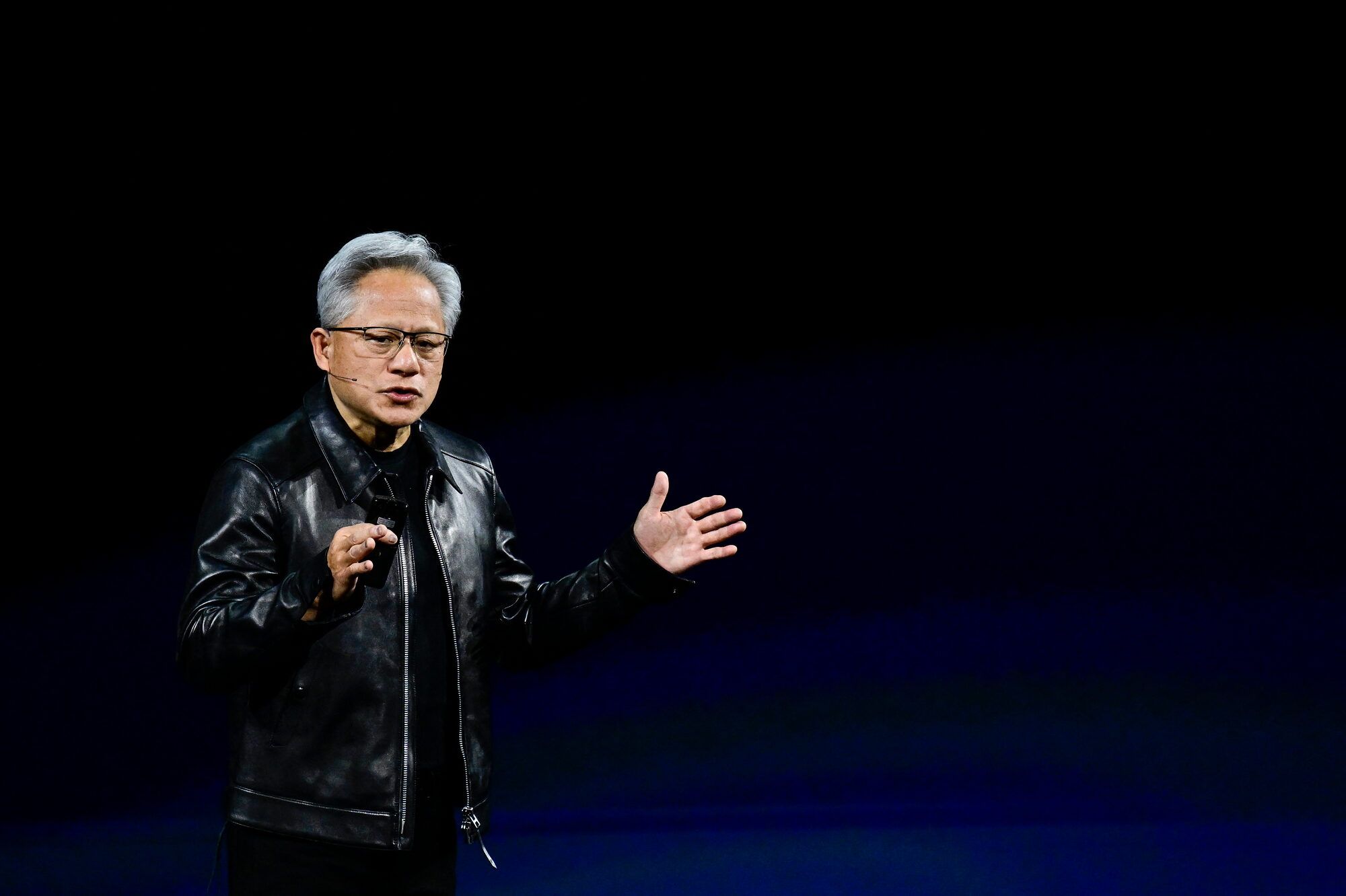
Tech history rarely turns on a single executive departure, but the sudden exit of Nvidia chief Jensen Huang breaks the pattern. When a company single-handedly anchors a multi-trillion-dollar technological shift, losing its frontman isn't just corporate drama. It's an existential stress test for the entire market.
People love to say that great companies outlast their founders. They usually do. But Nvidia isn't just a chipmaker. It's the central engine of the global artificial intelligence economy. For years, Huang wasn't merely running a business; he was acting as the ringmaster, visionary, and chief psychologist for an entire sector built on speculative hardware spending and massive data center investments.
Now he is gone. And Wall Street is waking up to a terrifying reality.
The Real Cost of Personality-Driven Valuation
For the past several years, the valuation of the entire artificial intelligence ecosystem has rested on a mountain of cheap debt, towering revenue expectations, and absolute faith in Nvidia's pricing power. Huang's genius wasn't just designing GPUs. It was convincing the world's most powerful technology conglomerates to hand over billions of dollars for hardware that hadn't even finished manufacturing. He held ecosystems together through sheer force of will and a leather jacket.
Without him at the helm, the underlying fragility of the AI market stands exposed. International Monetary Fund warnings point out that interconnected AI financing involves hundreds of billions in debt tied directly to aggressive future revenue commitments. When lenders look at these financing arrangements today, they aren't seeing a bulletproof technological revolution. They're seeing a high-risk house of cards.
When the charismatic founder who built those relationships overnight is suddenly forced out due to personal scandals, institutional trust evaporates fast. Lenders and enterprise buyers are no longer willing to take things on blind faith. They want concrete customer contracts, proven equity backing, and actual evidence that end users will pay enough to justify mountains of new server capacity.
Why the Supply Chain Vulnerability Matters More Than Ever
Nvidia's dominance was never purely about code or silicon. It was about execution, manufacturing relationships, and an obsessive focus on hardware supremacy built over decades. A massive part of that success relied on tight, personal alignment with key manufacturing partners like TSMC.
When a visionary CEO steps down under a cloud, those fragile institutional partnerships feel the strain. Competitors like AMD and custom silicon projects inside major hyperscalers like Google and Microsoft are watching closely. They smell blood in the water. If Nvidia stumbles operationally or loses its aggressive pricing leverage, the entire market dynamics shift overnight.
Enterprise tech buyers hate uncertainty. If they suspect Nvidia's next leadership team will lack the strategic ruthlessness to maintain hardware monopolies, they will accelerate their internal diversification plans. They will push harder for in-house chips. They will look for alternatives. The era of unquestioned hardware dominance is facing its first real challenge.
Stop Treating AI Like an Unstoppable Freight Train
The narrative surrounding artificial intelligence has been plagued by lazy thinking. Tech pundits treat the boom like a physical law of nature. It isn't. It's a capital allocation cycle driven by immense hype and subsidized by venture capital and corporate cash reserves.
When the primary ringmaster exits the circus, investors are forced to look at actual balance sheets, return on investment timelines, and real enterprise software adoption metrics. And honestly, those metrics look a lot shakier than big tech marketing teams want to admit. Most enterprises are still struggling to find profitable use cases for expensive generative models that justify millions in recurring infrastructure costs.
If the new leadership at Nvidia dials back the hyper-aggressive expansion strategy, or if skittish financial markets tighten the liquidity tap for data center construction, the cooling effect will spread rapidly. Startups relying on cloud computing credits will feel the pinch. Venture capital will dry up faster. The entire ecosystem will experience a painful, long-overdue reality check.
What Comes Next for the Industry
The panic on the stock market isn't an overreaction. It's a rational response to the removal of a single point of failure that held an entire global market together.
If you're building products or investing capital in this space right now, you need to change your playbook immediately. Stop assuming infinite compute capacity and zero-cost capital are permanent features of the landscape.
Diversify your hardware stack. Audit your software dependencies. Prepare for a tighter credit environment where every single dollar spent on AI infrastructure must prove its direct business value within quarters, not decades.
The golden era of easy AI growth is officially over. Adapt or get left behind.