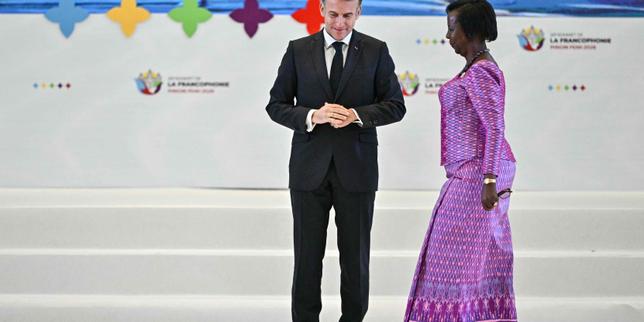
Diplomacy is messy. When heads of state touch down in Phnom Penh for the twentieth Sommet de la Francophonie, they aren't just arriving for handshakes and group photos. They are walking straight into a high-stakes geopolitical brawl.
Emmanuel Macron stepped up to the podium in Cambodia with a straightforward plea for unity and consensus. But behind closed doors, the atmosphere is freezing cold. You have a massive collision between Kinshasa and Kigali happening thousands of miles away from African soil, yet tearing at the very seams of an international linguistic organization that spans fifty-three member states.
Most observers look at the Organisation internationale de la Francophonie as a cultural club centered around the French language. That perspective is outdated. It's a political arena where influence, post-colonial ties, and regional power struggles collide daily. Right now, those collisions are louder and more dangerous than they've been in decades.
The Battle for the Top Job
At the heart of the Phnom Penh gathering lies a fierce contest for the secretary-general post for the upcoming 2027 to 2030 term. Incumbent Louise Mushikiwabo of Rwanda is fighting to hold onto her seat. Her supporters point to her institutional experience and diplomatic weight. Her critics, however, see an unacceptable consolidation of power by a regime deeply entangled in destabilizing eastern Congo.
Enter Dacian Cioloș. The former Romanian Prime Minister threw his hat into the ring, backed quietly by French diplomacy looking for a compromise candidate. Meanwhile, the Democratic Republic of Congo initially pushed Juliana Amato Lumumba into the race before signaling a willingness to withdraw her to build a unified front. Coumba Bâ of Mauritania also entered the diplomatic fray, setting up a crowded, tense contest.
Kinshasa didn't mince words. Congolese authorities made it clear that keeping Mushikiwabo at the helm of the OIF while Rwandan-backed aggression tears through eastern provinces is a bridge too far. The threat is real: the DRC has openly floated walking away from the organization entirely. Losing the second-largest French-speaking nation on earth would deal a catastrophic blow to an institution already bleeding members following the departures of Burkina Faso, Mali, and Niger from its broader diplomatic orbit.
Why Paris Is Walking a Tightrope
France finds itself in an impossible position. As the primary financial contributor alongside Canada, Paris is constantly damned if it acts and damned if it doesn't. When Emmanuel Macron phoned Rwandan President Paul Kagame in the dead of night ahead of the summit to push for a consensus withdrawal of candidates, Kigali instantly cried foul.
Rwandan officials slammed the move as unacceptable French meddling. They argued that Paris is trying to rig the game behind the scenes to install a European candidate and sideline African leadership. The numbers don't lie, though. Africa accounts for twenty-seven of the fifty-three full members and roughly sixty-five percent of all French speakers worldwide—a demographic share projected to approach ninety percent by mid-century. Since the secretary-general post was created back in 1997, three of the four leaders have been African: Boutros Boutros-Ghali, Abdou Diouf, and Mushikiwabo herself.
Rwanda's foreign ministry argued aggressively that supporting a non-African candidate disrespects this demographic reality. Paris counters that the goal is preserving institutional integrity and preventing a total meltdown between two warring member states. Honestly, both arguments have merit, which is precisely why nobody is backing down.
Consensus Versus the Majority Trap
For decades, the OIF operated on an unwritten rule. You didn't vote on leadership. You talked until everyone agreed on a single name. That tradition of consensus kept the peace when ideological divides threatened to rip the organization apart.
Times have changed. In two thousand twenty-two, member states approved a major procedural update: if consensus fails after exhaustive talks, the organization can resort to a simple majority vote. That rule change changed the entire strategic calculus in Phnom Penh.
If it comes down to a floor vote, blocs shift, alliances get weaponized, and the loser walks away nursing a bitter grievance. That's why Macron's call for consensus isn't just standard diplomatic fluff. It's an emergency brake. Without consensus, the OIF risks cementing permanent fractures between African nations aligned with Kigali, those standing with Kinshasa, and Western capitals trying to manage the fallout.
What Real Leadership Looks Like Now
Organizations like the OIF survive only when member states believe the forum offers more value than exit. Right now, that value proposition is wobbling.
If you're watching this summit unfold from the outside, don't buy the sanitized press releases about cultural fraternity. This is a brutal test of hard power cloaked in soft-power language. Rwanda wants to project regional dominance and defend its institutional footprint. The DRC wants international accountability and refuses to normalize diplomatic life with an adversary while its territory is burning. France wants to prevent another humiliating African exit on its watch.
Resolving this crisis requires abandoning business-as-usual diplomacy. Member states need to separate cultural promotion from political patronage. If the OIF continues to act as a proxy battleground for Central African security conflicts, no amount of appeals for unity from Emmanuel Macron will save it from irrelevance.
To fix the structural rot, the organization must enforce strict neutrality guidelines for its leadership while building binding mediation mechanisms for member states at war with one another. Cultural ties cannot survive active military hostility between founders. Leaders in Phnom Penh need to stop kicking the can down the road, ditch the procedural threats of majority votes, and broker a realistic compromise that respects African demographic weight without rewarding territorial aggression.
Stop pretending language is enough to hold broken alliances together. Real reform starts the moment member states prioritize shared security over political stubbornness.



