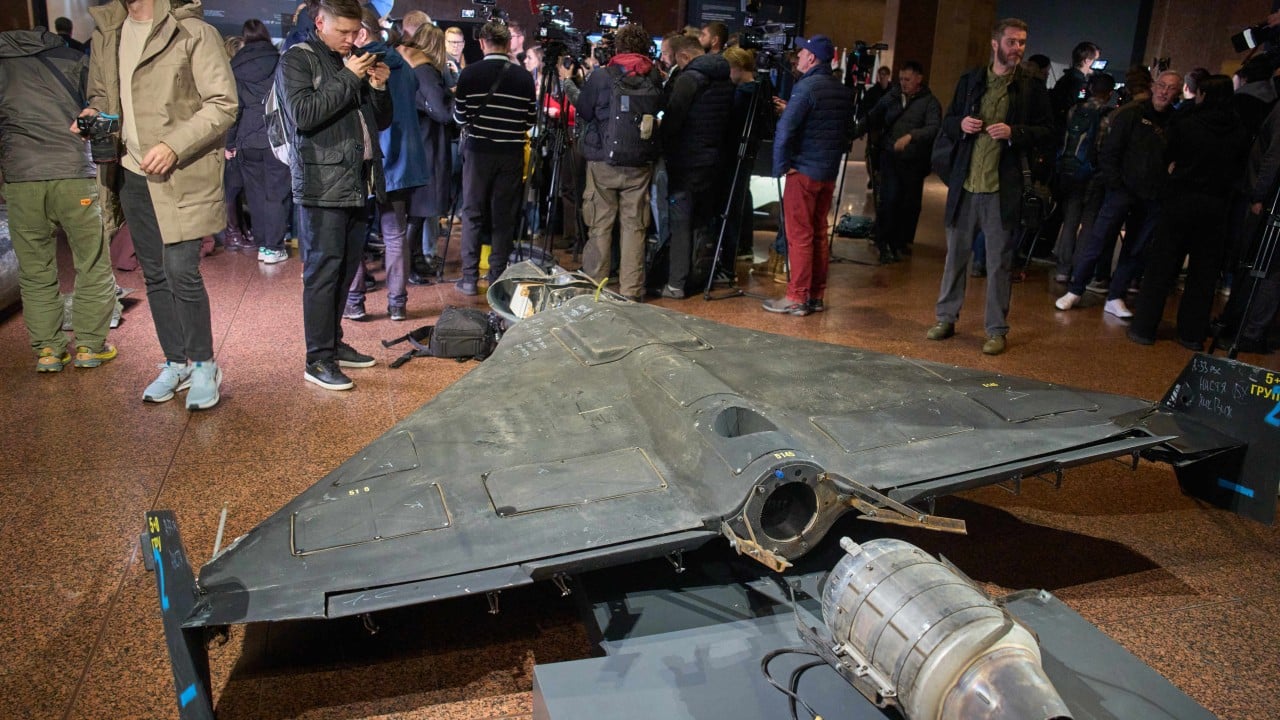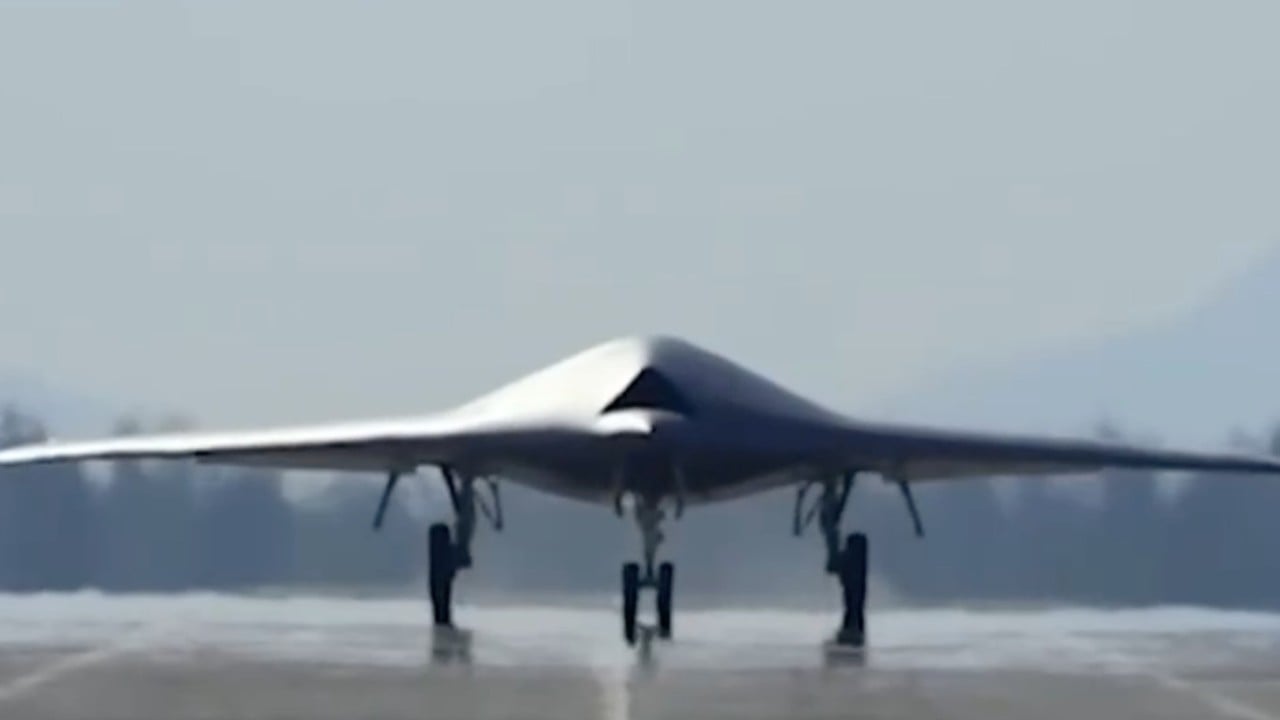
Recent footage released by Chinese state media offers a remarkably clear, multi-angle look at the People's Liberation Army Air Force's GJ-11 stealth drone, putting its internal weapons bay and low-observable design choices on display. If you look past the usual promotional gloss, the video provides defense analysts with tangible clues about how Beijing intends to handle high-risk strike and reconnaissance missions.
The GJ-11, often called the Sharp Sword or Xuanlong, is a tailless flying-wing combat aerial vehicle designed to operate where traditional manned fighters would face extreme attrition. While military enthusiasts love to argue over raw numbers and hypothetical combat radii, the real story lies in the structural integration shown in these recent clips—specifically how the airframe manages radar and infrared signatures during active flight operations.
Breaking Down the Stealth Engineering Visible in the Footage
The newly broadcast segments focus heavily on structural details that aerodynamicists obsess over: the dorsal air intake, the flattened exhaust configuration, and the flush-fitting internal belly weapons bay.
When you design a flying-wing drone meant for deep penetration, managing radar cross-section from every possible angle is an uphill battle. Placing the air intake on top of the fuselage shields the engine fan blades from ground-based radar emitters looking up at the aircraft. Meanwhile, the serrated edges on the internal weapon bay doors are shaped to scatter radar waves rather than bouncing them back to an enemy receiver.
Military aviation experts have noted that the exhaust nozzle has undergone specific thermal and radar-absorbent treatments. In practical terms, keeping a low infrared signature is just as important as dodging X-band radars if you want to avoid modern heat-seeking missile systems or advanced tracking optics.
The Reality of Manned-Unmanned Teaming
Beyond the hardware itself, state media coverage highlighted operational milestones, including live-fire testing managed by early cohorts of independent PLA drone operators. The tactical doctrine driving the GJ-11 revolves around acting as a pathfinder or loyal wingman alongside crewed stealth platforms like the J-20.
Sending a multi-million-dollar crewed fighter into heavily defended airspace to suppress enemy air defenses is a high-stakes gamble. By pushing an autonomous or semi-autonomous stealth drone ahead of the formation, an air force can absorb the initial risk of enemy surface-to-air missile networks. The GJ-11's internal carriage capacity allows it to haul precision munitions without spoiling its aerodynamic clean lines or inflating its radar profile.
However, translating promotional footage into battlefield reliability is entirely different. Analysts often point out that while airframes can look pristine in a controlled broadcast, the true test for these platforms involves data-link security, resistance to heavy electronic jamming, and autonomous decision-making loops under contested conditions.
Carrier Integration and the Evolving Naval Variant
Another dimension worth watching is how this technology scales across military branches. Observers tracking Chinese naval developments have identified related flying-wing concepts—such as the GJ-21 variant—tailored for deployment on large deck amphibious assault ships and carrier aviation environments featuring electromagnetic catapult systems.
Adapting a tailless stealth platform for carrier operations introduces severe engineering hurdles. Landing a flying wing on a moving deck requires precise flight control software and robust landing gear assemblies, elements that are clearly visible in the latest close-up cuts.
Ultimately, the new GJ-11 footage confirms that development is progressing steadily from static airshow mockups to active field testing and live-fire integration. It isn't an overnight revolution, but rather a methodical step toward routine operations for low-observable unmanned systems.
Watch how these platforms integrate into larger exercise loops over the next year to gauge their actual operational maturity.