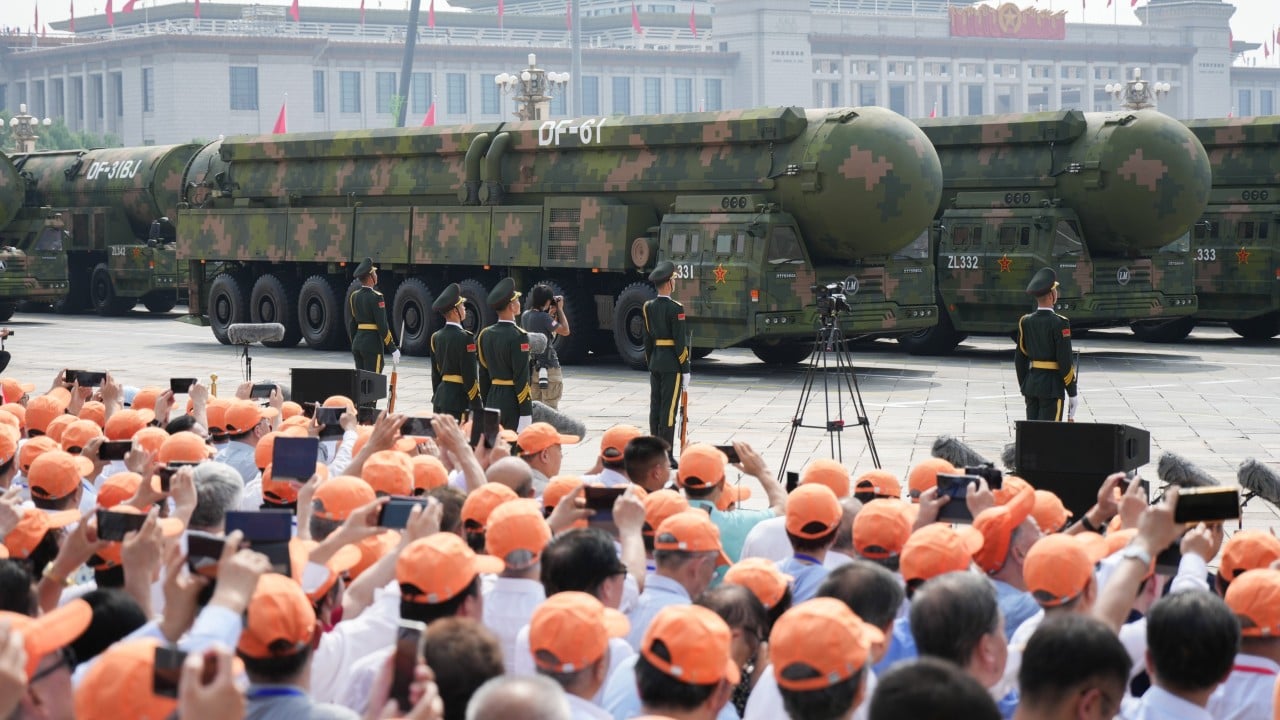
When Beijing rolls out advanced hardware and airspace restrictions start popping up on state monitors, defense watchers stop what they are doing. You do not need to look very hard to see why. Recent public showcases featuring nuclear-capable Dongfeng systems, alongside sudden airspace closures that choke commercial corridors, have reignited fierce debates over an impending intercontinental ballistic missile test.
Most casual observers treat these events as isolated military parades or routine bureaucratic notices. They are wrong. These synchronized movements of heavy hardware and aviation warnings represent a calculated exercise in signaling. Beijing wants the world to look up, watch the maps, and take note of its evolving nuclear posture.
Decoding the Hardware Display
State media broadcasts recently put hardware like the nuclear-capable DF-61 and the rarely seen DF-100 front and center. This is not a coincidence. When military planners allow specific platforms to step out of the shadows, they are sending a message about operational readiness and deterrence credibility.
The strategy behind showing off these systems involves a few core elements.
- Highlighting modern road-mobile capabilities that survive initial targeting strikes.
- Showcasing dual-capable cruise or ballistic systems designed to evade regional missile defense architecture.
- Signaling technological maturity to domestic and international audiences alike.
People often assume that showing a missile means it is just for show. In reality, these platforms require immense logistical backing. Deploying them into public view means the troops operating them have drilled relentlessly. They are operational, mobile, and ready to move at a moment's notice.
The Signal in the Sky
Hardware is only half the story. The real indicator of what comes next happens in the air traffic control rooms. When regional authorities issue sudden flight bans and hazard warnings for specific aerospace corridors, commercial airlines must quickly redraw their routes.
These closures usually map directly onto historical drop zones or projected test trajectories. Analysts track these NOTAMs (Notices to Air Missions) because governments cannot hide a massive rocket arc. Closing the airspace clears the hazard zone long before ignition takes place.
If you want to know when a major strategic test is coming, ignore the official press releases and watch the commercial flight paths. The civil aviation disruptions tell the truth long before any state broadcaster confirms a launch.
Why This Strategic Signaling Matters Right Now
Global tensions are tightening across multiple fronts. Washington, Taipei, and regional capitals are watching every movement of the People's Liberation Army Rocket Force. By coupling physical displays of the DF series with airspace restrictions, Beijing is testing the monitoring limits of its rivals.
This is about deterrence psychology. Nuclear modernization is expensive and provocative, but keeping it invisible defeats half the purpose. By putting the hardware on display while the skies empty out, military planners create a psychological pressure point. You are forced to wonder just how far along their testing cycle has gone.
Looking Past the Headlines
Do not get bogged down by sensationalist claims of sudden escalation. What we are witnessing is part of a long-term modernization roadmap. China's military is systematically replacing older liquid-fueled silos with solid-fueled, mobile systems that offer faster launch times and higher survivability.
The public displays and flight bans are milestones in that transition. They show a military confident enough in its engineering to put its primary deterrence tools on display for the world to evaluate. Keep your eyes on the aerospace notices and the logistical shifts. That is where the actual story unfolds.