European troops from 11 countries have spent November drilling in Poland for a potential postwar Ukraine mission, yet the biggest takeaway isn't the troop count on paper. It's the hard reality of what happens when allies build a non-NATO security force while fighting still rages and Moscow calls foreign troops legitimate targets.
Under Exercise Koalicja (meaning "Coalition" in Polish), forces tied to the Multinational Force-Ukraine (MNF-U) moved by sea, air, and land to Poland's Nowa Deba training area starting November 9, 2026. Around 2,800 coalition troops from countries including France, the United Kingdom, Germany, Spain, Sweden, Estonia, Lithuania, the Netherlands, and Belgium joined Polish logistical support—with reports noting total personnel across the effort reaching nearly 5,000 when Polish troops are counted—while Turkey participated remotely from Istanbul to lead maritime mine-clearing planning.
Honestly, if you read headline summaries and picture blue helmets walking a quiet ceasefire line, you've got the wrong picture. Officials from France, the UK, and Poland have been blunt about one thing: this isn't a peacekeeping or ceasefire-monitoring force. It's designed to deploy only after active fighting stops, at Kyiv's request, to help regenerate Ukraine's armed forces, clear sea mines in the Black Sea, and create the air security conditions needed to reopen Ukrainian skies to civilian flights.
Why European Troops Are Drilling in Poland Instead of Waiting for NATO
NATO consensus is slow. Sometimes it stalls completely. Because a formal NATO Article 5-style guarantee for Ukraine hasn't materialized under alliance-wide backing, France and the United Kingdom pushed forward with a separate European-led track through the wider Coalition of the Willing political grouping—a framework publicly flagged in July 2026 by Polish Prime Minister Donald Tusk after talks in Paris.
British Lieutenant General Tom Bateman, who commands the MNF-U, framed the November maneuvers as turning political pledges into actual operational readiness. UK Defense Secretary Wes Streeting put it even more bluntly, calling the effort a real military setup rather than a hypothetical plan waiting for fighting to end.
Here's why doing this outside NATO command matters so much on the ground:
- Faster political decisions: A coalition of willing states doesn't need unanimous agreement from every single NATO capital to move logistics, plan training missions, or coordinate air and maritime tasks.
- Clearer division of labor: Britain and France are carrying major command and operational weight, Poland is serving as the vital logistical hub without committing its own soldiers to Ukrainian soil under a postwar settlement, and Turkey is anchoring maritime mine-clearing work remotely.
- No automatic alliance tripwire: Because MNF-U isn't a NATO operation, a postwar deployment wouldn't automatically trigger collective defense across all 32 NATO members—a deliberate choice to manage escalation risks, even as it raises tough questions about deterrence.
What Happens on the Ground at Nowa Deba and Beyond
Look closely at what troops actually practiced in Poland. It tells you how modern warfare has reshaped even postwar planning.
Soldiers didn't just march or hold static briefings. They rehearsed moving troops and gear across Poland by rail and road, ran joint command-and-control drills, trained in wooded trench warfare, operated surveillance drones, and practiced defending against drone attacks. In the air, Britain committed Typhoon fighter jets and a Voyager aerial refueling tanker to simulate the kind of air presence needed to help reopen civilian airspace safely once hostilities end.
At sea, the mission focus is practical and economic: clearing naval mines in the Black Sea so commercial shipping can move without constant hazard. On land, the emphasis is on rebuilding and training Ukraine's forces rather than policing a front line.
From an operational standpoint, I've seen plenty of multinational exercises look great in press releases and struggle the moment rail schedules slip or communications protocols clash across languages. Moving heavy equipment through Central Europe while keeping command lines clean is unglamorous work. That's precisely why rehearsing road, rail, and command links in Poland matters before anyone talks seriously about stepping across the border.
The Three Friction Points Nobody Can Hand-Wave Away
Even supporters of the coalition admit the gap between a November drill in Poland and boots on the ground in Ukraine is wide. Three hard problems stand out.
1. Rotation Math Eats Headcount Fast
A headline number like 2,800 coalition troops—or even near 5,000 including Polish personnel—looks tidy until you do the rotation math. As Ed Arnold, a senior research fellow at the Royal United Services Institute (RUSI) and a former British military officer, has pointed out in defense coverage, only about a third of a force is typically frontline-ready at any given moment once you account for leave, training, rest, and deployment cycles. Sustaining a credible postwar presence over years requires far deeper troop pools than a single exercise window.
2. Defensive Mission vs. "Legitimate Target" Warnings
Russian President Vladimir Putin has flatly opposed foreign troops in Ukraine and warned that Western forces deployed there would be treated as "legitimate targets." Even if MNF-U troops are meant to train, reassure, and support rather than fight an offensive war, they still need real combat capability just for force protection. A purely "tripwire" force without teeth can get overwhelmed; a heavy combat force raises the stakes of any clash.
3. No Ceasefire Yet Means Everything Remains Conditional
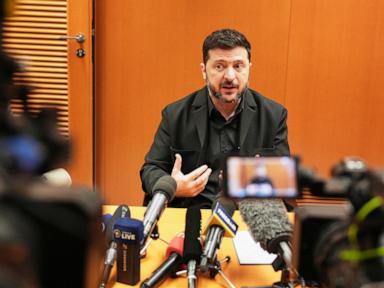
While diplomatic talks and high-level meetings—such as allied gatherings in Berlin in November 2026—continue around postwar security guarantees, Russian strikes on Ukraine's power grid and infrastructure haven't stopped as Ukraine heads into another winter of full-scale war. Ukrainian President Volodymyr Zelenskyy has pressed allies for strong, reliable postwar guarantees, yet rules of engagement, exact deployment zones, and final political sign-offs still depend on fighting actually ending.
Common Misconceptions Worth Clearing Up
People tend to mix up four separate ideas when this story hits the news. Let's separate them cleanly.
First, this isn't a NATO deployment. NATO as an alliance hasn't put these drills under its command structure for a Ukraine mission. Second, this isn't a traditional peacekeeping mission. Officials have stressed MNF-U isn't tasked with patrolling a ceasefire line as a neutral buffer. Third, Poland isn't committing troops to postwar Ukraine. Warsaw is hosting training and providing critical logistics, while explicitly stating it won't send its own soldiers onto Ukrainian territory as part of a postwar settlement. Fourth, a drill doesn't equal an order to deploy. Rehearsing logistics and command readiness gives leaders options; it doesn't lock in a deployment date or force size.
Practical Next Steps If You're Tracking This Story
If you're following European security, defense policy, or regional stability around Ukraine, don't get pulled around by viral clips from training grounds. Track concrete markers instead:
- Watch political mandates, not just troop counts: Pay attention to formal parliamentary approvals, funding commitments, and clear rules of engagement in capitals like London, Paris, Berlin, Warsaw, and Ankara.
- Separate reassurance/training from deterrence: Ask who actually backs up a training or air-patrol mission if a ceasefire breaks down—especially regarding U.S. posture and air-defense depth.
- Track logistics and Black Sea shipping milestones: Watch concrete steps on rail/port capacity, demining coordination, and aviation safety assessments, because those practical pieces move long before any final troop deployment order is signed.