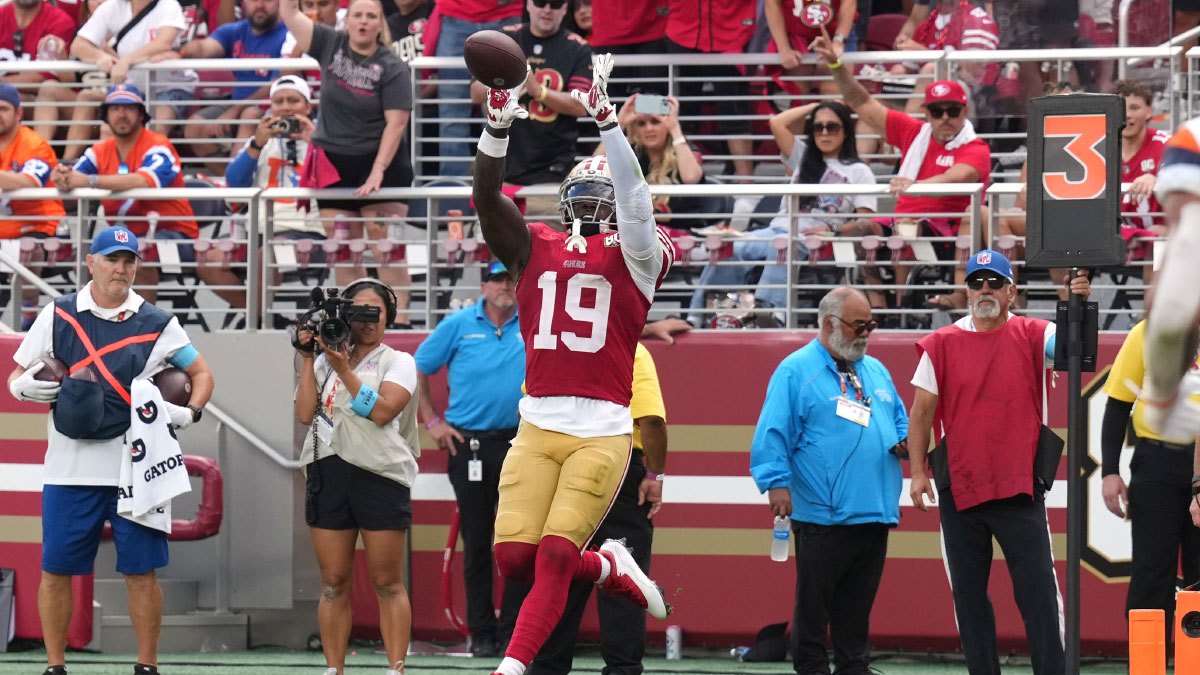
Wide receiver Deebo Samuel returned to practice for the San Francisco 49ers after missing multiple games due to a right hamstring strain sustained during a Week 5 victory against the Seattle Seahawks, according to reports from The Athletic. The veteran pass-catcher logged a limited participation session on Wednesday as the team prepared for an upcoming matchup against the Dallas Cowboys. Head coach Kyle Shanahan confirmed the progress during a media session covered by 49ers Webzone, noting that the wideout's reintegration comes at a critical juncture for an injury-plagued offense.
The return provides a significant boost to a receiving corps currently managing several physical setbacks across the roster. San Francisco has navigated recent weeks without several core contributors, placing heightened emphasis on securing healthy veterans ahead of the stretch run of the regular season. Front office executives and coaching staff alike have relied on internal depth to maintain offensive efficiency while key personnel work through their respective rehabilitation programs.
The franchise originally re-signed the veteran playmaker on a one-year agreement carrying a base value of four million one hundred thousand dollars, supplemented by nearly three million dollars in performance-based incentives, according to data detailed by NBC Sports. That contract structure ties significant financial compensation to metrics such as total scrimmage yards, total touchdowns, kick-return performance, and playoff qualification. General manager John Lynch outlined during the summer that the offensive strategy involves deploying the multifaceted weapon across traditional wide receiver formations, backfield packages, and special teams return duties.
Injury Recovery and Practice Status
The recovery timeline for Deebo Samuel spanned multiple weeks following the lower-body strain he suffered in Seattle on October 11, Draft Sharks data indicates. Medical staff held the wide receiver out of consecutive games, including matchups following the team's mid-season bye week, to ensure proper healing of the hamstring tissue. Wednesday's limited practice session marked his first on-field work in nearly a month, though medical and coaching staffs plan to evaluate his endurance through the remainder of the practice week before confirming his game-day availability. Similar insight on the subject has been provided by The Athletic.
Complicating matters further, the team's offensive depth has been tested by injuries to other primary targets. Wide receiver Mike Evans has remained sidelined due to ongoing Achilles tendinitis, forcing the coaching staff to adjust route schemes and target distributions. The convergence of these health concerns placed an extra burden on available depth options, making the recovery timeline of the veteran focal point a primary variable for offensive coordinator planning.
Roster Adjustments and Trade Acquisitions
To insulate the roster
Deebo Samuel Navigates Career Transition Amid Shift in NFL Offensive Schemes
sports
Wide receiver Deebo Samuel enters a critical juncture in his professional career as changing offensive philosophies and personnel adjustments reshape his role within the National Football League, according to recent team evaluations and sports analytics reports. The veteran playmaker, renowned for his rare dual-threat capability as both a pass-catcher and a runner, faces heightened scrutiny regarding his durability and tactical deployment. Front office executives and coaching staff across the league continue to assess how versatile offensive weapons fit into evolving modern schemes, raising questions about future contract valuations and positional longevity.
The strategic deployment of multi-dimensional offensive assets has undergone a structural transformation over recent seasons, driven by defensive adaptations and advanced tracking data. According to data compiled by Pro Football Reference, modern defenses deploy lighter, faster nickel packages with increased frequency, which effectively limits the space available for traditional yards-after-catch specialists. Analysts note that these defensive shifts require offensive coordinators to redesign blocking schemes and route trees to maximize efficiency, directly impacting how hybrid playmakers accumulate statistics.
The Evolution of Deebo Samuel
The emergence of the wide back archetype fundamentally altered how defenses prepared for versatile offensive weapons when Deebo Samuel entered the league out of the University of South Carolina. Selected in the second round of the 2019 National Football League Draft by the San Francisco 49ers, the dynamic receiver quickly established himself as a central pillar of head coach Kyle Shanahan's offensive scheme. His historic 2021 campaign showcased this dual capability, as he recorded 1,405 receiving yards and 365 rushing yards with 14 total touchdowns, earning first-team All-Pro honors.
Sustaining that level of physical exertion through multiple seasons introduced significant health complications, prompting both strategic re-evaluations and adjustments to his snap counts. Medical staff and coaching personnel collaborated to manage his workload, reducing his direct rushing attempts to preserve his longevity over the course of the grueling 17-game schedule. This tactical pivot aimed to mitigate the wear and tear associated with taking direct contact from linebackers and defensive linemen in the box, though it simultaneously altered his raw offensive production metrics.
Tactical Shifts and Scheme Adaptations
Modern offensive coordinators face mounting pressure to diversify play-calling tendencies as defensive coordinators implement complex disguised coverages and simulated pressures. According to tactical breakdowns published by The Athletic, opposing defenses spend significant preparation time identifying the alignment of versatile skill-position players prior to the snap. This defensive focus often forces offenses to use such players as decoys to create numerical advantages for secondary targets on the perimeter.
Coaching staffs must balance the necessity of keeping their best athletes involved with the imperative to protect them from high-impact collisions across the middle of the field. Offensive line performance and quarterback rhythm play an instrumental role in facilitating this balance, as protection breakdowns force receivers into hurried routes and riskier contested catches. Analysts emphasize that the success of a hybrid skill player depends heavily on the overall stability of the surrounding offensive line and the execution of the running game.
Financial Realities and Roster Construction
The business side of professional football introduces another layer of complexity regarding the future deployment and compensation of high-profile offensive contributors. Salary cap constraints require front offices to carefully weigh the financial allocation toward skill-position players against investments in foundational trench positions such as offensive tackle and pass rusher. According to salary cap data from Spotrac, veteran contracts carrying substantial cap hits trigger intense internal evaluations regarding productivity relative to market value.
Roster construction strategies across the league increasingly favor drafting cost-controlled rookies over committing long-term funds to aging veterans who rely heavily on explosive athleticism. This macro-economic reality within the sports industry places a premium on adaptability, forcing veteran players to refine their route-running precision and blocking techniques to maintain high value. Consequently, contract negotiations often hinge on a player's willingness to accept modified responsibilities that align with long-term team building goals and fiscal sustainability.
Medical Management and Durability
Physical resilience remains a central talking point for evaluators tracking the trajectory of elite players who absorb significant contact on a weekly basis. Hamstring strains, ankle sprains, and soft-tissue injuries frequently disrupt the rhythm of high-usage offensive weapons, forcing teams to rely on depth pieces during critical stretches of the season. According to injury reports monitored by the National Football League league office, athletic training staffs utilize advanced workload monitoring software to track acceleration metrics and fatigue levels in real time.
Medical professionals and sports scientists advocate for proactive rest protocols rather than reactive treatment following acute trauma, changing how organizations approach rehabilitation and recovery. This scientific approach helps extend careers but occasionally creates friction with competitive players eager to maintain their normal game-day workloads. Front offices must navigate these competing priorities carefully to protect their financial investments while maximizing on-field performance during crucial divisional matchups.
Future Outlook and Roster Decisions
The coming months will provide definitive answers regarding how franchises integrate versatile skill players into their long-term competitive windows. Observers will monitor mandatory minicamps, training camp practices, and early-season snap distributions to gauge whether offensive schemes continue to evolve toward specialized roles or versatile utility. The ultimate resolution of these tactical and financial questions will shape roster configurations across the league well into the subsequent competitive cycle.