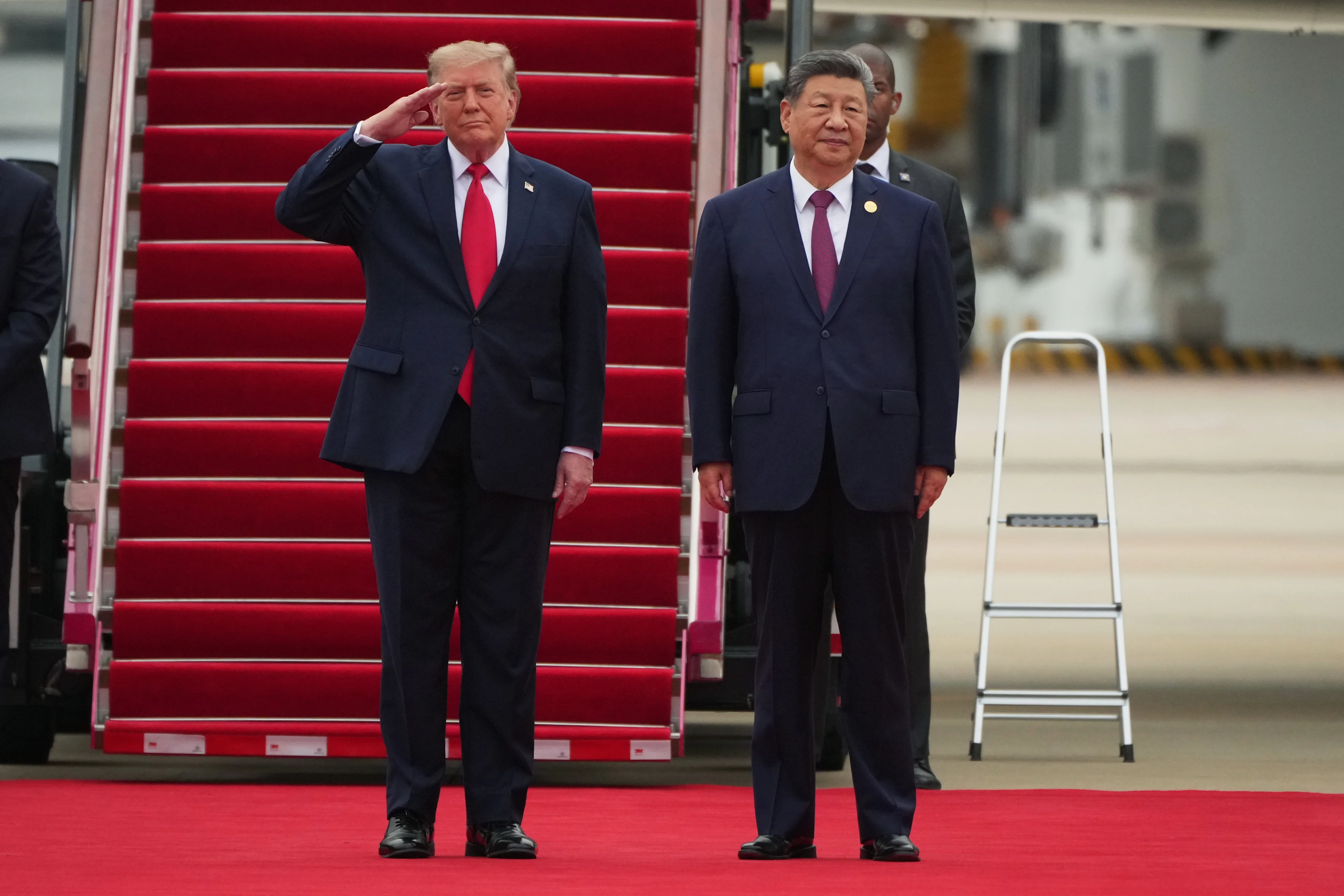
Donald Trump just touched down in the southern Chinese tech hub of Shenzhen. The optics are striking. Chinese President Xi Jinping personally greeted him on the tarmac, setting the stage for what could be one of the most consequential diplomatic gatherings of the decade.
If you are wondering why this specific trip matters right now, look past the red carpets. On the agenda are high-level bilateral talks with Xi and an unprecedented trilateral meeting that includes Russian President Vladimir Putin. World leaders are converging for the APEC summit, but the real action is happening behind closed doors.
What the Shenzhen Summit Actually Means for Global Power
Most mainstream coverage treats these summits like polite photo-ops. They aren't. Trump arrives in China fresh off a stop in the Philippines, dealing with a bruised political landscape back home and intense scrutiny over tech policy. Yet, stepping onto Chinese soil allows him to pivot straight back to high-stakes geopolitics.
The centerpiece of the visit isn't just trade. It's the rare three-way dynamic between Washington, Beijing, and Moscow. Analysts are already drawing uneasy historical comparisons to Yalta, wondering if the world's major nuclear powers are carving out new spheres of influence while smaller nations watch from the sidelines.
Putin stands to gain immense diplomatic leverage just by sharing a table with Trump and Xi. For Moscow, sitting shoulder-to-shoulder at the summit elevates Russia's standing despite crippling Western sanctions, effectively neutralizing efforts to isolate the Kremlin.
The Nuclear and Tech Elephant in the Room
Behind the diplomatic handshakes, heavy security, and state luncheons, real friction points remain unaddressed. Artificial intelligence and nuclear command systems are quietly dominating preparatory talks. The white-hot question is whether these three superpowers can establish guardrails on AI deployment in military arsenals, or if a new arms race is already locked in.
At the same time, the shadow of Silicon Valley and global supply chains looms large over the delegation. Recent controversies surrounding tech giants, export controls, and competitive positioning on artificial intelligence are testing the limits of the fragile U.S.-China commercial truce. Trump has defended his stance on maintaining American tech dominance, but friction between treasury and commerce officials highlights how difficult it is to balance confrontation with cooperation.
Why Xi Jinping Wants This Stage
Xi is playing a careful balancing act. As the host of APEC in Shenzhen, Beijing wants to project an image of steady economic leadership, championing free trade and multilateral cooperation.
At the same time, dragging China into uncomfortable trilateral negotiations over European security or Ukraine isn't exactly what Beijing's planners prefer. China dislikes sudden geopolitical surprises. Xi wants the economic benefits of engagement with Washington without looking like he's bowing to Western pressure or letting Putin steal the spotlight.
Keep your eyes on the concrete outcomes rather than the rhetorical flourishes. Whether this meeting yields actual arms control frameworks or merely serves as a high-profile theater of competing ambitions will shape international relations well into next year.