Cross-border security operations don't usually unravel in broad daylight, but that's exactly what happened when intelligence agencies in North Macedonia and Greece dismantled a proxy network allegedly working on behalf of Tehran. Four suspects found themselves detained in North Macedonia, with a fifth placed under house arrest and a sixth actively hunted by authorities.
The operation exposes how foreign intelligence services increasingly outsource wet work to domestic criminal syndicates, using local muscle to cross international borders.
How the Balkan Proxy Network Operated
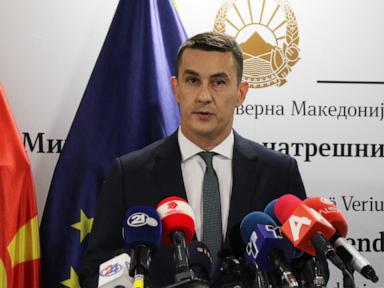
Bojan Hristovski, the director of North Macedonia's National Security Agency (ANB), didn't mince words during a press conference in Skopje. He laid out how local operatives were embedded directly inside North Macedonia's domestic criminal underworld.
Instead of deploying trained intelligence officers across the Greek border, the handlers relied on career criminals to handle the logistics, surveillance, and execution prep.
The strategy is simple and brutal. By hiring local thugs, intelligence services build a layer of plausible deniability. If the operation goes sideways, low-level foot soldiers take the fall while the state sponsors stay safely out of reach.
According to investigators, the cell took direct instructions from an Iranian national identified as Edris Jahangiri Mavaneh, alongside connections pointing toward Naji Sharifi Zindashti—a figure already wanted in the United States for running international networks targeting dissidents.
The Missing Pieces in the Official Narrative
Intelligence announcements always leave gaps, and this case is no exception. Officials in Skopje and Athens have kept tight-lipped about who the actual target was. Was it an Iranian dissident living in exile? A foreign official? Or perhaps a dual national critical of Tehran's regime?
Without a named target, evaluating the exact motivation remains speculative. What we do know is the mechanics of the plot. The suspects weren't just talking shop; they were actively running reconnaissance and staging logistical support for a hit on Greek soil.
The Greek National Intelligence Service worked hand-in-hand with North Macedonia's ANB to roll up the cell. In fact, the dragnet spanned borders when a North Macedonian national was picked up in Greece on November 12 and quickly extradited back north.
Why Southeast Europe Is a Prime Playground for Covert Operatives
If you're wondering why a plot targeting Greece was being managed through North Macedonia, look at a map and examine regional law enforcement gaps. The Western Balkans have long served as a transit corridor for weapons, drugs, and illicit cash.
Porous borders, weaker institutional oversight, and deeply entrenched organized crime syndicates create a fertile breeding ground for foreign operatives looking to buy local compliance.
Criminal groups care about money, not geopolitics. If a foreign intelligence proxy flashes enough cash, local gangs will provide safe houses, forged documents, and trigger-happy enforcers without asking too many questions.
This incident proves that modern state-backed violence isn't confined to major capitals like London, Paris, or Washington. Quiet border regions in Southern Europe are just as vulnerable to geopolitical proxy wars playing out in the shadows.
As authorities hunt for the remaining fugitive, the real test will be whether international pressure forces states to crack down harder on the intersection between organized crime and foreign intelligence operations. Until then, criminal syndicates will keep renting out their services to the highest bidder, turning local gangsters into unwitting foot soldiers for foreign wars.