Accidents don't check your schedule before they wreck your morning. One minute you're carrying a bowl of porridge across your own backyard, and the next you're bleeding out on the patio with a severed artery. That is the brutal reality Ian Barton faced in the quiet town of Gracemere, Queensland, when a simple breakfast routine turned into a desperate fight for survival.
Most people freeze when panic sets in. But two tradesmen working across the street didn't wait for permission to act. What happened next is a masterclass in raw adrenaline, quick thinking, and why basic practical skills still matter when professional help is forty minutes away.
The Morning Routine That Turned Deadly
It started like any other Monday. Ian Barton, 93, was walking across his backyard patio carrying breakfast when he tripped over a small ramp. The bowl shattered instantly. A sharp ceramic fragment sliced deep into his wrist, cleanly severing an artery.
His wife, Joy, heard the crash and rushed outside. What she saw was a nightmare. Blood was pooling fast, and Ian was losing consciousness on the concrete. She screamed for help across the cul-de-sac, setting off a chain of events that would ultimately keep her husband alive.
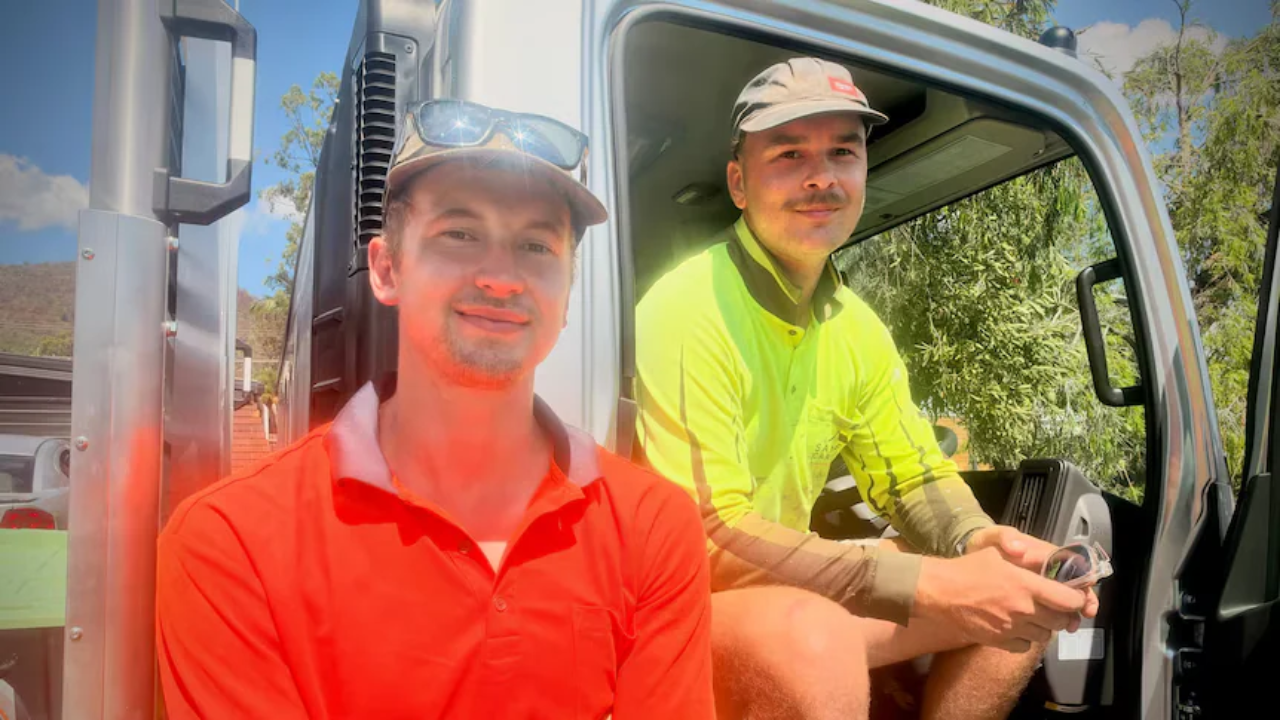
Across the street, carpenter Josh Sander and his apprentice, Gary Tunbridge, were gearing up to install a pergola on a nearby roof. They heard the frantic cries, dropped their tools, and sprinted toward the property without hesitation.
When Sander reached the patio, he didn't hesitate. He saw the sheer volume of blood and realized immediately that standard first-aid manuals wouldn't save Ian on their own.
Improvising Under Pressure When Seconds Count
Initial attempts to manage heavy arterial bleeding are messy. Sander grabbed a tea towel and wrapped it tightly around Ian's wrist. It wasn't enough. The blood soaked straight through.
Realizing they were running out of time, Sander made a split-second decision. He yelled to Tunbridge to grab industrial adhesive tape from their truck while he sprinted inside the house. He grabbed the first piece of fabric he could find—one of Joy Barton's dresses.
They wrapped the wound in the dress fabric and layered the heavy adhesive tape over it, cranking it down to create an improvised pressure dressing. It wasn't pretty, but it worked. They held continuous, grinding pressure on the wound while Ian repeatedly faded in and out of consciousness.
During the grueling 40-minute wait for local paramedics to arrive, Tunbridge noticed Ian choking. Moving with instinct, the apprentice cleared the elderly man's airway by removing his false teeth, preventing a secondary disaster while Sander kept the tourniquet secure.
What This Emergency Teaches Us About Real-World Readiness
When the ambulance finally reached the Gracemere cul-de-sac, paramedics took over and rushed Ian to Rockhampton Hospital. He underwent emergency surgery that very afternoon and stabilized.
Joy Barton kissed her husband goodbye as he was wheeled away, honestly believing she wouldn't see him alive again. Yet, thanks to two strangers who refused to stand by, Ian survived.
Stories like this expose massive gaps in modern emergency readiness. Most people assume an ambulance will arrive in five minutes. In regional areas, or during peak emergency dispatch overloads, you might be entirely on your own for half an hour or more.
Here is what you actually need to keep in mind when severe trauma strikes:
- Arterial bleeding kills fast: If blood is spurting or pooling rapidly, direct, heavy pressure is your only priority. Forget gentle handling; stopping the hemorrhage comes first.
- Improvisation wins: Medical kits are nice to have, but clean fabric, clothing, and heavy-duty tape will do the job when specialized tourniquets aren't within arm's reach.
- Airways matter just as much: In panic situations, choking or blocked airways from unconsciousness can kill a patient just as quickly as blood loss. Always check breathing.
- First aid training decays: Sander admitted it had been years since his last formal course, which prompted him to book a refresher immediately. Muscle memory fades when you don't practice.
Joy Barton spent the aftermath trying to figure out how to repay the two tradesmen who saved her husband of six decades. Sander and Tunbridge brushed off the praise, noting they were just relieved to see Ian recovering.
Don't wait for a crisis on your doorstep to brush up on trauma response. Check your local community center, book a certified first-aid refresher course this month, and remember that when disaster strikes, theory stops and pure grit takes over.



