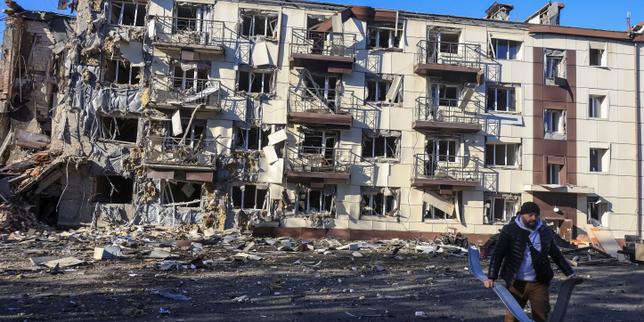
Winter in Ukraine brings a biting cold that doesn't negotiate. When Russian missiles or drones slam into energy installations, the stakes aren't abstract geopolitical points on a map. They are homes, hospitals, schools, and water pumps sitting in freezing darkness.
The strategy is painfully deliberate. By cutting power to nearly 50,000 households in the Odesa oblast following coordinated strikes on local energy infrastructure managed by DTEK, military planners in Moscow are weaponizing the civilian environment. It's a systematic effort to break morale, exhaust emergency repair crews, and make ordinary life unsustainable as temperatures plummet.
Understanding why Odesa remains a primary target requires looking past the immediate blackout statistics. This major southern port city isn't just an economic lifeline for Ukrainian grain exports through the Black Sea corridor. It is a vital logistical hub. When infrastructure facilities in northern parts of the Odesa region take direct hits, the ripple effects hit local water supplies, heating grids, and public transport networks within hours.
DTEK engineering teams routinely face an impossible race against time. Working in sub-zero conditions, specialists must assess structural damage, clear hazardous debris, and rewire high-voltage substations while sirens wail overhead. Power is often restored through complex rerouting, but every successive strike wears down the grid's reserve capacity. Backup generators help critical facilities like hospitals survive, yet keeping thousands of residential apartments warm requires stable grid-scale power generation.
The broader pattern across Ukraine reveals an escalation in winter targeting. International human rights organizations and monitoring missions continue documenting how these systematic attacks breach basic humanitarian norms. Yet, statistics from local providers show that repair crews fix transformers and transmission lines with staggering speed, often restoring service within twenty-four to forty-eight hours despite ongoing aerial threats.
For residents enduring these blackouts, daily routines mean adapting instantly. Portable power stations, thermal clothing, and community heating tents—known locally as points of invincibility—become essential tools for survival. Local authorities coordinate emergency shelters equipped with generators, hot tea, and internet access so families can weather the disruptions.
The resilience of southern Ukraine's energy grid demonstrates a remarkable engineering feat, but it remains constantly vulnerable. As long as infrastructure strikes persist, cities like Odesa live on a razor edge between ordinary life and total isolation. Preparing for the next wave of disruptions requires decentralized micro-grids, decentralized power generation, and accelerated international air defense deliveries to protect what little stability remains.
Check your local emergency plans, keep backup batteries charged, and support humanitarian relief efforts providing winter gear and generators to affected families across southern Ukraine.