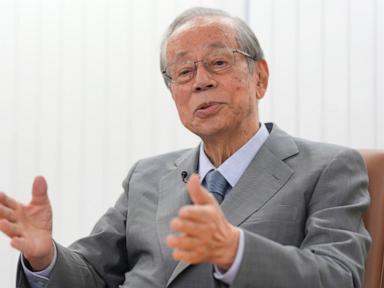
History isn't just made by loud voices shouting across borders. Sometimes, it's quietly engineered by veteran bureaucrats who understand numbers as well as they understand human nature. When former Japanese Prime Minister Takeo Fukuda walked the halls of power, he brought the sharp mind of a Ministry of Finance technocrat to the chaotic world of post-war international relations.
You can't understand modern East Asian geopolitics without looking at what Fukuda built. Long before global headlines focused entirely on trade wars and territorial disputes, he recognized a fundamental truth. Japan's long-term security and economic survival depended entirely on stable, constructive diplomatic bridges with its neighbors, especially China and Southeast Asia.
From Ministry Bureaucrat to Prime Minister
Born in Gunma Prefecture in 1905, Fukuda didn't start out as a traditional politician. He was a stellar student who conquered Tokyo Imperial University's law program before dominating the rigorous civil service exams. Entering the Ministry of Finance in 1929, he spent decades mastering the mechanics of budgets, fiscal policy, and currency controls.
When he finally transitioned into electoral politics, winning a House of Representatives seat in 1952, he carried that bureaucratic rigor straight into the Liberal Democratic Party. By the time he claimed the prime minister's office in December 1976, he wasn't just another party boss. He was a seasoned economic specialist who knew how international capital and political leverage actually moved.
The Architect of the Fukuda Doctrine
Most political leaders want to leave behind grandiose monuments. Fukuda left behind a diplomatic framework that outlasted him by decades. In 1977, he traveled to Southeast Asia and laid out what historians now call the Fukuda Doctrine.
He made three bold promises. Japan would renounce nuclear weapons and military superpower status. Tokyo would build heart-to-heart mutual confidence with Southeast Asian nations based on equal partnership. And Japan would actively promote peace and stability throughout the entire region.
Critics at the time dismissed it as empty political rhetoric. They were wrong. That doctrine fundamentally reshaped Tokyo's foreign policy playbook, turning a nation previously feared for its wartime aggression into a trusted economic partner across ASEAN.
Cementing the Treaty of Peace and Friendship with China
Fukuda's crowning achievement arrived in 1978. Negotiations for the Treaty of Peace and Friendship with China had stalled for years over thorny territorial claims and historical grievances. Both sides dug in their heels.
Instead of letting talks collapse, Fukuda pushed his diplomatic corps to find practical compromises. He understood that formalizing normalized relations with Beijing wasn't just a nice diplomatic gesture—it was an absolute necessity for regional stability.
When the treaty was finally signed and ratified in late 1978, it opened the floodgates for economic cooperation, technological exchanges, and cultural ties. It laid the bedrock for decades of explosive trade growth between the two Asian powerhouses. Even as political winds shifted over the ensuing decades, subsequent leaders on both sides kept returning to the foundational framework Fukuda helped construct.
Why His Legacy Still Matters Today
Fukuda's premiership lasted a relatively brief two years, ending in 1978 after a tough internal party defeat to Masayoshi Ōhira. Yet his impact stretches far beyond his short time at the top.
He didn't rely on fiery populist speeches. He used quiet persistence, institutional leverage, and a deep respect for economic interdependence.
When you look at modern supply chains connecting Tokyo and Beijing, or the intricate diplomatic dance between Japan and Southeast Asia, you are seeing the echo of Takeo Fukuda's vision. He proved that strategic patience and pragmatic diplomacy often outlast short-term political posturing.



