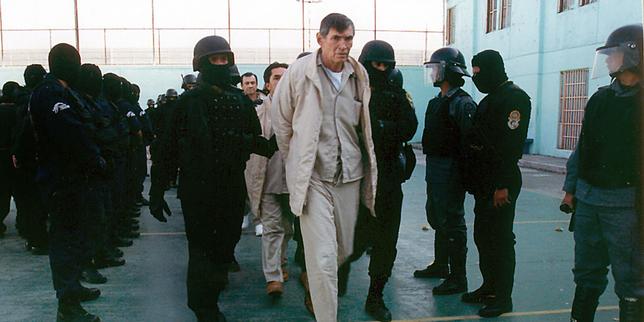
The man who taught modern cartels how to operate died quietly in a hospital bed at age eighty. Miguel Angel Felix Gallardo spent nearly four decades behind bars, locked away after orchestrating a empire that changed international crime forever. Yet, long after his arrest, the blueprint he created continues to haunt security forces across the Americas. You can't understand modern drug trafficking without looking at how the original "Boss of Bosses" structured a fragmented underworld into a corporate machine.
The Rise Of The Guadalajara Cartel
Back in the late nineteen-seventies and early eighties, smuggling narcotics across the border was a messy, disorganized business. Independent operators handled small patches of territory, constantly fighting each other and law enforcement. Felix Gallardo saw a better way. He brought disparate smuggling families together under one umbrella, forming the infamous Guadalajara Cartel.
He wasn't your typical cinematic thug. He dressed like a businessman, operated with political protection, and treated drug trafficking like corporate logistics. Instead of fighting state authorities, he bought them. Bribes flowed freely to police commanders, governors, and federal agents. This strategy allowed his organization to move tons of Colombian cocaine into the United States with minimal interference.
Under his leadership, the cartel diversified routes and built reliable infrastructure. They didn't just traffic drugs; they established a monopolistic network that controlled the entire supply chain. For a brief window, Felix Gallardo sat at the absolute apex of the global underworld.
The Murder That Brought Down An Empire
Every empire hits a breaking point. For the Guadalajara Cartel, that turning point came in nineteen eighty-five with the brutal torture and murder of US Drug Enforcement Administration agent Enrique "Kiki" Camarena.
Camarena had been aggressively investigating the cartel's massive marijuana operations, including the legendary sprawling plantation known as Rancho Bufalo. His intelligence work threatened to expose the deep collusion between the cartel and high-ranking Mexican politicians. Felix Gallardo ordered him abducted.
The backlash was swift and unforgiving. Washington unleashed intense political pressure on the Mexican government, demanding immediate arrests. The fallout fractured the political cover that Felix Gallardo had relied on for years. While he tried to maintain a low profile, hiding out in Guadalajara, the walls quickly closed in. Authorities finally arrested him in nineteen eighty-nine, marking the definitive end of the unified Guadalajara Cartel.
Splitting The Spoils And Creating Modern Cartels
When Felix Gallardo went to prison, he didn't just vanish. He made a fateful decision before his capture or during his early incarceration that reshaped history. He split his territory among his trusted lieutenants and family members.
This division of assets birthed the modern cartel landscape. The border plazas were carved up. The Tijuana route went to the Arellano Felix organization. The Juarez plaza went to the Fuentes Carillo family. Sinaloa fell to figures like Joaquin "El Chapo" Guzman.
Felix Gallardo thought he was preserving peace by dividing the market. Instead, he created fierce rivalries. As the cocaine trade exploded in value, these regional factions turned on each other. The cooperative corporate model devolved into brutal turf wars. The violence we see today traces its roots directly back to that partitioning of territories.
Decades Behind Bars And Declining Health
For thirty-seven years, Felix Gallardo faded from the streets into the harsh reality of maximum-security confinement. He spent decades inside facilities like Puente Grande before transferring to house arrest or medical care due to failing health.
By his final years, he was a frail, blind, and sick old man. In interviews granted late in life, he claimed to be broken physically, denying active control over the monsters his empire spawned. Yet, public sympathy was non-existent. The legacy of bloodshed tied to his name outlived his physical strength.
His death closes a definitive chapter of twentieth-century crime history. The era of the single supreme godfather negotiating directly with governments has vanished. In its place stands a Hydra of decentralized, hyper-violent syndicates that refuse to cooperate or compromise. Felix Gallardo built the foundation, and the world has been paying the price ever since.



