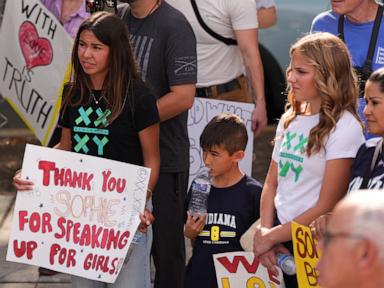
For years, the political map on transgender athlete bans looked simple. Red states passed restrictions through statehouses, blue states blocked them, and everyone stayed firmly in their ideological corners. That neat dividing line just shattered. Voters in Washington state and Colorado approved ballot measures restricting transgender athletes from participating in school sports, proving that the debate over youth athletics transcends traditional partisan boundaries.
When citizens take matters into their own hands via the ballot box, things get unpredictable. Lawmakers in Democratic strongholds like Washington and Colorado repeatedly blocked legislative bans on transgender women and girls competing in female sports. So, conservative activists bypassed the legislature entirely. They took the issue directly to the voters. The results sent shockwaves through national politics, signaling that public opinion on this issue is far more complicated than party affiliation suggests.
Breaking Down the Votes
Let’s look at why this matters right now. Twenty-seven states already had restrictions on the books, but nearly all of them were enacted by Republican-controlled state legislatures and governors. Washington and Colorado are different. These are reliably blue states where statewide elections usually tilt left. Yet, when given a direct vote, significant portions of the electorate signaled support for changing how gender categories are enforced in school sports.
The measures themselves sparked fierce campaigns on both sides. In Washington, the initiative drew intense scrutiny over enforcement mechanisms, with critics pointing out the complex logistical questions raised by sex-verification requirements. Meanwhile, Colorado's Proposition 134 pushed similar changes, requiring school sports teams to be explicitly classified by biological sex definitions tied to reproductive organs.
Proponents framed these measures as a matter of fairness and the preservation of competitive integrity for natal females. They argued that physiological differences developed during and after male puberty provide an insurmountable athletic advantage, making separate sports categories meaningless if biological boundaries aren't strictly maintained.
The Pushback and Practical Realities
Civil rights advocates and medical associations didn't stay quiet. Opponents of the measures argued that the rules are discriminatory, deeply invasive, and harmful to vulnerable youth. Pediatricians and family physicians raised alarms over the practical enforcement of verification rules, noting that asking medical professionals to inspect or verify reproductive anatomy during routine sports physicals crosses a major ethical line.
Furthermore, legal challenges are virtually guaranteed. Opponents argue these mandates violate constitutional equal protection guarantees and student privacy rights. Turning schools and athletic associations into arbiters of biological verification creates a bureaucratic nightmare that administrators are ill-equipped to handle.
What This Means for the Future of Sports Policy
We are watching a massive shift in how contentious social issues are fought. Relying on state legislatures is no longer the only path for activists. The ballot initiative strategy used in Washington and Colorado opens a brand-new playbook. If conservative advocacy groups can win sports restriction votes in left-leaning states, no region of the country is immune to national cultural debates.
At the same time, this creates a chaotic patchwork of rules for student-athletes, coaches, and athletic associations trying to navigate conflicting state laws and federal guidelines. The legal battles ahead will determine whether these voter-approved mandates can survive constitutional scrutiny or if they will get struck down in federal court. The debate over who plays where is far from over, and the battleground just expanded into the heart of the Pacific Northwest and the Mountain West.



