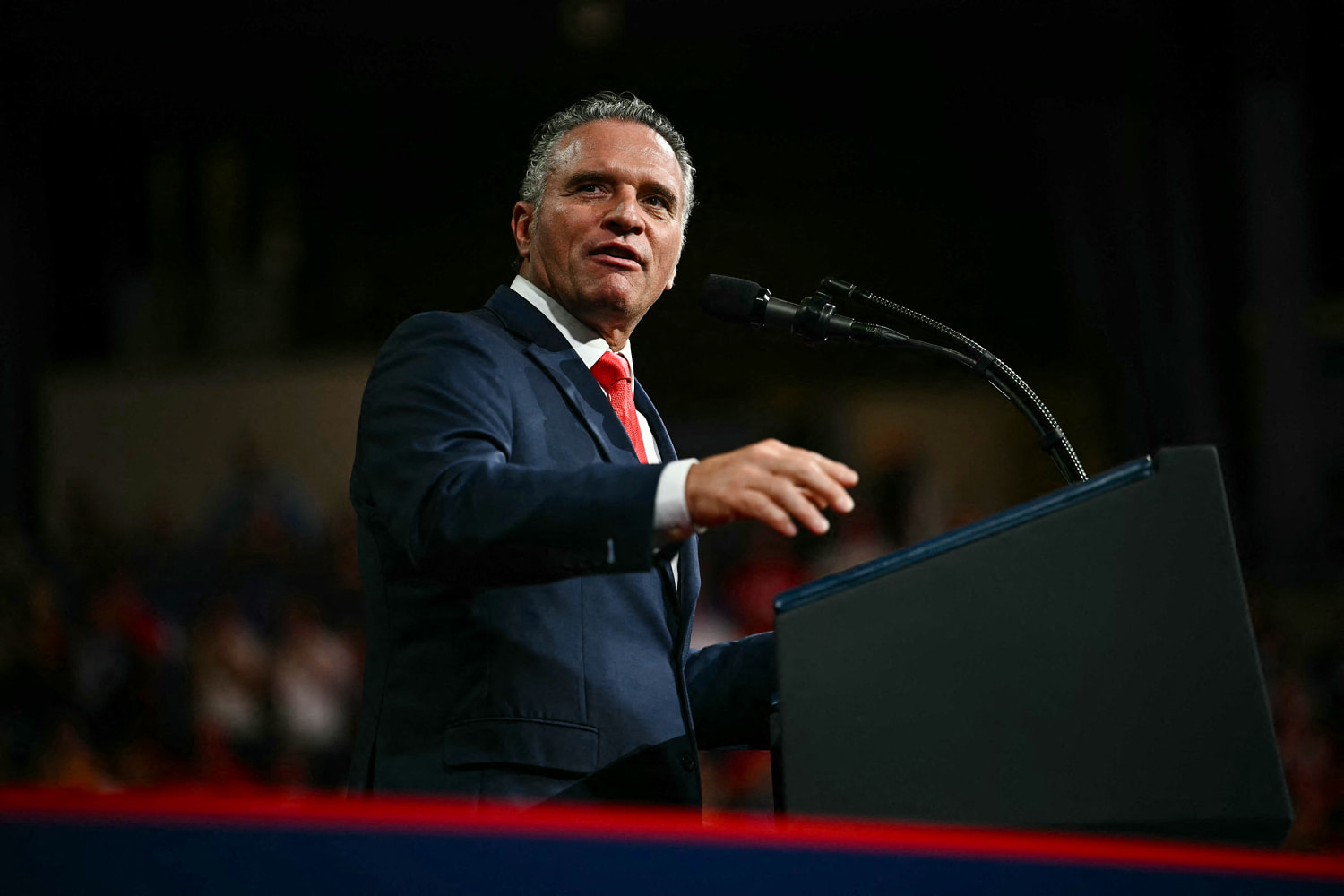
Big tech money doesn't quietly fund campaigns anymore. It lands right in the middle of local policy battles, forcing candidates to pick sides on resource consumption, utility hikes, and the future of regional growth. In the 2026 Kansas gubernatorial race, that flashpoint is the data center boom.
Republican Senate President Ty Masterson and Democratic state Senator Cindy Holscher are fighting tooth and nail to succeed term-limited Democratic Governor Laura Kelly. While debates usually circle around traditional tax policy and education funding, the massive influx of artificial intelligence data centers has hijacked the conversation. Tech groups and IT interests have poured nearly $1 million into Masterson’s campaign orbit, fueling a fierce debate over whether these server farms represent economic salvation or an environmental drain on the heartland.
The Money Trail and Big Tech Influence in Topeka
When netChoice president and CEO Steve DelBianco delivered an $8,000 campaign check to Ty Masterson’s gubernatorial campaign, it wasn't an isolated event. It formed part of a broader wave of IT and AI industry investments aimed at keeping Kansas friendly to tech expansion.
Masterson has worn these contributions as a badge of pro-business growth, arguing that regions like Barber County—which approved a Google-affiliated project—desperately need economic diversification and the kind of high-tech investment that keeps young people from leaving the state. He points to Senate Bill 98, enacted in 2025, as proof that adequate guardrails are already in place to shield everyday consumers from utility bill spikes and protect local water resources.
Holscher sees it differently. After holding dozens of town halls across rural and urban Kansas, she shifted her stance on unchecked server farm development. She argues that voters are genuinely worried about depleted aquifers and skyrocketing electricity bills. According to her campaign, big tech companies essentially bought Masterson's primary victory and pushed through legislation before communities understood the heavy infrastructural toll.
Water, Power, and the Political Flip-Flop Debate
The friction over data centers quickly turned personal on the campaign trail. Masterson labeled Holscher a political flip-flopper who blows whichever way the wind takes her, noting that she initially supported economic development frameworks before turning critical once public pushback intensified.
Holscher counters that listening to constituents isn't a weakness. When farmers worry about viable agricultural land being swallowed up by cooling facilities, and homeowners stare down projections of higher monthly utility bills to power racks of servers, politicians have to adapt. She argues that Kansas rushed into the digital infrastructure gold rush without building proper statewide protections, leaving local municipalities to fend for themselves against corporate giants.
The race reflects a wider national dilemma. Across the country, states are scrambling to balance the massive electricity demands of artificial intelligence against grid reliability. Server farms require millions of gallons of water for cooling and steady baseload power that strains local utilities. When utility regulators try to protect residential ratepayers from absorbing those costs, developers often threaten to take their investments to neighboring states.
What Voters Care About Most Right Now
Polling shows a tightly contested race, with single-digit margins separating the candidates as the general election approaches. Voters are weighing competing visions for the state's economic identity. On one side stands a traditional Republican philosophy centered on low taxes, deregulation, and rolling out the red carpet for corporate capital. On the other stands a Democratic challenge focusing on environmental protection, consumer safeguards, and reigning in special interest influence.
The outcome in Kansas will send a clear signal to state legislatures nationwide. As the demand for computing infrastructure accelerates, communities are no longer willing to accept blank-check developments without guaranteed safeguards for their water and electricity. Candidates who ignore those grassroots concerns risk a serious backlash at the ballot box, regardless of how much campaign cash arrives from out-of-state technology coalitions.



