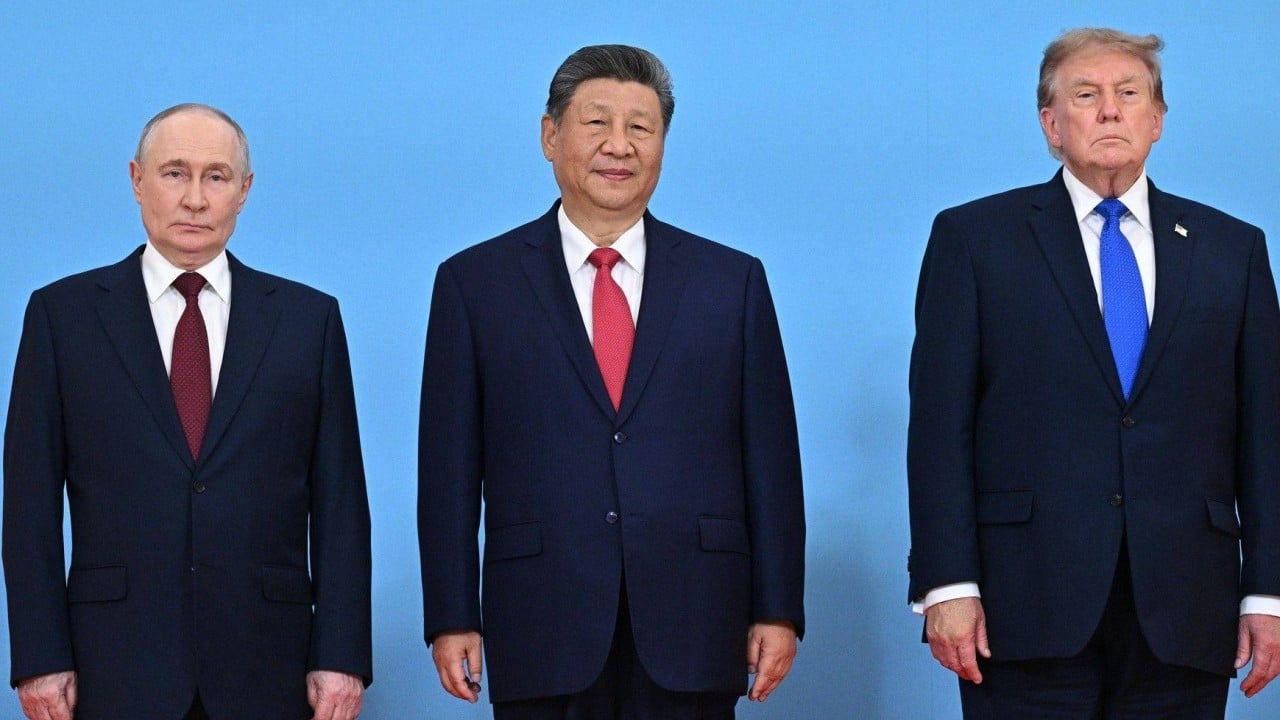
Geopolitics rarely offers up theater quite like the convergence of three nuclear superpowers in a single room. When Donald Trump, Xi Jinping, and Vladimir Putin sat down together during the Apec summit in Shenzhen, the optics overshadowed standard diplomatic caution. You didn't just have heads of state shaking hands; you had a high-stakes collision of ego, body language, and competing global strategies playing out in real time.
Most mainstream analysis treats these summits as straightforward policy negotiations. They aren't. They are carefully choreographed power plays where every handshake, escalator ride, and architectural choice sends a coded message to domestic and international audiences.
The Choreography of Power in Shenzhen
Xi Jinping broke protocol right out of the gate. Normally, Chinese leadership maintains a strict distance, but Xi met Trump directly on the airport tarmac in Shenzhen complete with a red carpet, honor guards, and a fighter jet flyover. That kind of pageantry matters. It signals strength and hosts the narrative on Beijing's home turf.
Then came the physical setup of the trilateral talks. The leaders sat around a massive, dark wooden round table with an arrangement of pink flowers positioned squarely in the center. In Chinese culture, round shapes symbolize harmony and unity. Yet, the atmosphere inside the room carried intense undercurrents of distrust. More details regarding the matter are detailed by USA Today.
Trump arrived fresh off a bruising domestic political defeat in the US midterm elections. Walking into the meeting with Putin, Trump announced to cameras, "Who is he? He's my friend!"—a classic rhetorical move designed to project personal dominance and warmth where institutional ties are fraying. Putin, meanwhile, leaned into the moment by emphasizing a shared multipolar world order alongside Beijing, describing China-Russia relations as "salda come una montagna" (solid as a mountain).
What Actually Happened Behind the Closed Doors
Strip away the handshakes and the symbolic round tables, and the substance reveals a mixed bag of grandstanding and defensive posturing.
Trump opened the session by declaring the meeting historic, positioning the US, China, and Russia as uniquely responsible for nuclear arms control. With the New Start agreement expiring, Washington has faced pressure to figure out how to cap arsenals while bringing Beijing into a framework that previously only involved Moscow and Washington. Xi used the platform to call for the complete prohibition and destruction of nuclear weapons, a safe, high-minded stance that costs nothing to say while deflecting direct accountability.
Ukraine and ongoing conflicts in the Middle East hovered over the room like uninvited guests. Putin argued that the three nations share converging interests in managing global security, though no breakthrough or ceasefire plan emerged from the talks. Instead, the meeting produced a joint "peace declaration" drafted by Chinese and Russian state media that took direct aim at international bodies.
Targeting the International Criminal Court
One of the sharpest turns in the summit came when Trump launched an attack on the International Criminal Court (ICC), calling it "out of control".
This critique was far from random. The ICC holds an active arrest warrant for Vladimir Putin over war crimes related to Ukraine. By joining forces rhetorically against international judicial overreach, the leaders sought to delegitimize legal instruments that restrict sovereign immunity. The joint declaration emphasized state consent and absolute respect for official immunities—a clear shield for Moscow and a nod to leaders wary of global courts.
Why the Apec Summit Shifted the Global Narrative
Critics argue that summits like this are little more than photo opportunities and performative statesmanship. Trump needed a win to project strength abroad following domestic legislative setbacks. Putin wanted validation of a multipolar framework that sidelines Western hegemony. Xi positioned Beijing as the ultimate global anchor and stability broker, bridging the gap between Washington and Moscow.
The reality on the ground hasn't fundamentally shifted. Trade disputes, deep-seated regional wars, and technological competition remain entirely unresolved. But the imagery matters. The Shenzhen summit redrew the psychological lines of global diplomacy, proving that when superpowers gather, the performance is always part of the policy.



